
Sewing Pattern Printing London: Ultimate How-To Guide
Sep 07, 2026
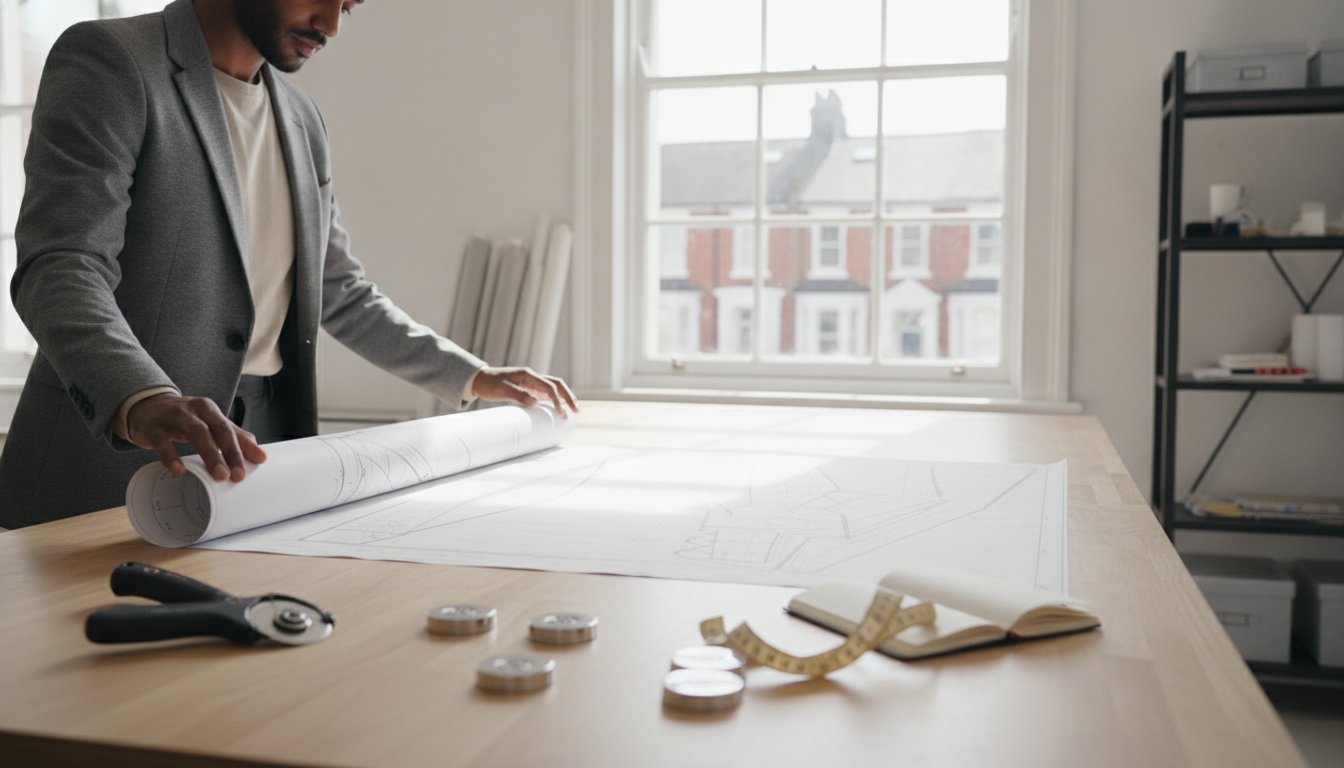
Why spend your precious Saturday morning hunched over the living room floor with a roll of tape and forty sheets of A4 paper? We've all been there, squinting at "tiled" margins and praying the printer didn't sneakily resize the file to "fit to page". It's a frustrating, time-consuming way to start a creative project, and it often leads to more anxiety than inspiration. If you're tired of the DIY struggle, it's time to switch to professional sewing pattern printing london services.
You deserve a perfectly scaled A0 or A1 print that lets you get straight to the fabric. This guide shows you how to manage your digital PDF files like a pro, from understanding "Copy Shop" layouts to selecting specific size layers. We'll walk you through the process of getting your patterns printed and ready for same-day collection at our 52 West Green Road centre in North London. You'll learn how to avoid common scaling errors and ensure your next garment starts with total precision. From file preparation to final pickup, we have the solutions to get you sewing immediately.
Key Takeaways
- Eliminate the frustration of A4 tiling by switching to professional large-format prints that ensure total accuracy for your garment projects.
- Master the technical side of sewing pattern printing london by correctly identifying A0 "Copy Shop" files and managing PDF layers for a custom fit.
- Ensure perfect scaling every time by verifying the 10cm test square and understanding standard A0 paper dimensions before you cut.
- Avoid delivery delays and shipping creases by choosing same-day collection from our North London centre at 52 West Green Road.
- Learn professional handling techniques to safely unroll your patterns and decide between cutting your master print or tracing for multi-size longevity.
The Rise of Indie Patterns and the Need for Professional Printing
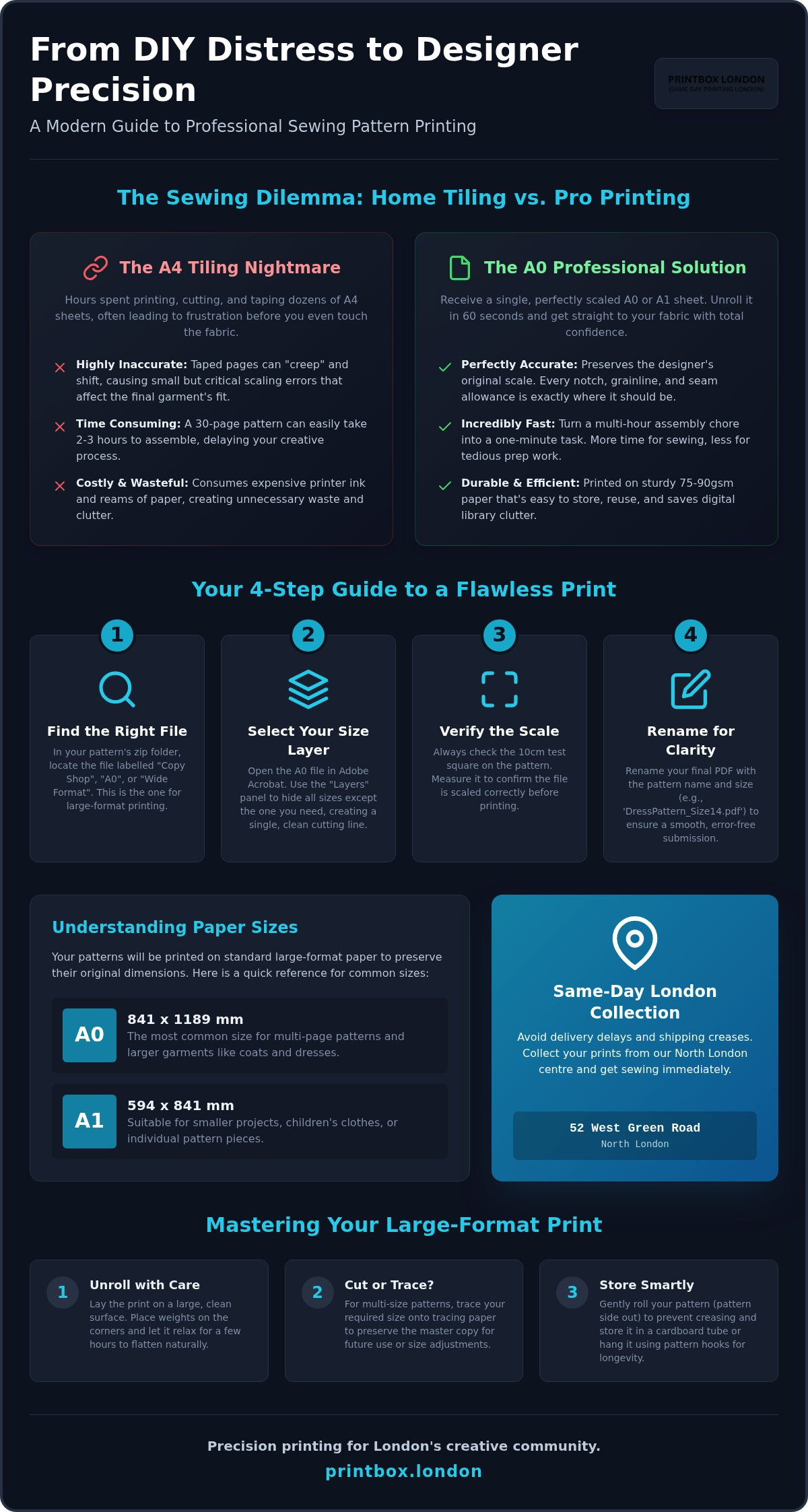
The sewing world has undergone a massive transformation. We've moved away from the fragile, crinkled tissue paper traditionally found in bulky envelopes. Today, independent designers release digital PDF downloads that offer instant access to the latest styles. While this shift is convenient, it created a new hurdle: the "A4 tiling" nightmare. Printing a 30-page sewing pattern at home involves hours of trimming, aligning, and taping. It's a tedious process that often introduces small scaling errors. These tiny shifts add up, leading to garments that don't fit quite right. Professional large-format printing preserves the designer's original intent. It ensures every notch and grainline is exactly where it needs to be.
Digital patterns also solve storage issues. Instead of drawers full of delicate paper, you keep a clean digital library. You only print the size you need, when you need it. This reduces waste and saves physical space in small London studios. It's a cleaner, more efficient way to manage a creative hobby.
Why London Creatives are Switching to A0 Prints
Speed is everything in a fast-paced city. London makers are busy. They don't want to spend three hours assembling a paper puzzle before they even touch their fabric. Professional sewing pattern printing london services turn that three-hour chore into a 60-second unrolling task. This is especially vital for complex projects like winter coats or tiered maxi dresses where the pattern pieces are massive. Accuracy is the second major driver. When you print on a single large sheet, you eliminate the risk of "creep" where taped pages slowly drift out of alignment. Your notches stay precise; your seams match perfectly every time.
Tiling vs. Large Format: A Cost-Benefit Analysis
Think about the true cost of home printing. You're using expensive ink cartridges and reams of paper. Add in the value of your time. If you spend two hours taping, you've already "spent" more than the cost of a professional print. We apply the same precision used in engineering drawing printing London to your dressmaking projects. It's about using high-performance production engines to get better results. A professional A0 print on 75gsm to 90gsm paper is durable. It's easy to fold, store, and reuse. You can even reprint a specific size years later without having to buy a whole new pattern. It's the pragmatic choice for serious makers.
How to Prepare Your Digital Files for Seamless Pattern Printing
Sewing has seen a massive resurgence in popularity, but modern digital patterns can be confusing. When you download a new design, you'll usually find several files in the zip folder. One is for home printing (A4 or US Letter) and another is specifically for sewing pattern printing london shops. This is often labelled "Copy Shop", "A0", or "Wide Format". Never send the "Print at Home" version to a professional printer. These files are designed to be tiled. If you print them on a large format machine, you'll end up with dozens of tiny boxes scattered across a massive sheet of paper. It's a waste of money and resources.
Clear file naming is your best friend. Don't leave your file named "final_pattern_v2_1.pdf". Rename it to include the pattern name and the specific size or sheet number. If a pattern has three A0 pages, label them "Sheet 1 of 3" and so on. This ensures our team knows exactly what you need without a back-and-forth email chain. If you're in a rush to start your project, prepping your files correctly is the fastest way to get your prints in hand.
The Secret to Using PDF Layers
Most modern indie patterns include "layers". This is a game-changer for accuracy. Open your A0 file in Adobe Acrobat and look for the stack of papers icon on the left side of the screen. You can toggle off every size except the one you're making. This leaves you with a single, clean cutting line. It eliminates the confusion of following multiple dashed lines. If the file is complex, you can "Print to PDF" after selecting your layers to create a flattened version. This locks in your choices and ensures the printer sees exactly what you see on your screen.
A Step-by-Step Checklist for File Submission
Follow these five steps from download to upload to ensure a perfect print every time.
- Download and Extract: Unzip your pattern folder and locate the specific A0 or Copy Shop PDF file.
- Check Format: Ensure the file is a PDF; professional machines cannot print directly from website links or proprietary design software.
- Verify Security: Check that the file isn't password protected or restricted, as this blocks production software from opening the document.
- Confirm Page Count: Open the file to see if it contains multiple pages; some patterns require two or three separate A0 sheets.
- Final Review: Check the "Test Square" on your screen to ensure it's visible and correctly placed before you finish your upload.
Understanding Scale, Paper Weights, and Large Format Sizes
A0 is the industry standard for large-format patterns. It measures exactly 841mm x 1189mm. Most indie designs fit onto one or two of these sheets, providing a seamless canvas for your project. If you're working with smaller accessories or children's clothing, A1 (594mm x 841mm) might be sufficient. We specialise in sewing pattern printing london at our 52 West Green Road centre, ensuring every sheet is cut to these precise dimensions. For complex patterns with many overlapping sizes, colour printing is a lifesaver. It allows you to follow the red line for a size 12 and the blue line for a size 14 without confusion. If you've already used PDF layers to isolate your size, our high-speed black and white printing is a pragmatic, cost-effective choice.
The test square is the most critical element of any digital pattern. It's usually a 10cm or 2-inch box placed on the first page of the file. Folkwear, one of the oldest independent sewing pattern companies, has been a staple for makers for decades; their modern PDF releases always include this essential safeguard. You must measure this square with a physical ruler as soon as you unroll your print. If the square is even slightly off, the entire garment will be the wrong size. We treat these files with the same technical rigour as architectural plans to ensure your measurements are perfect.
Why Scale is Non-Negotiable in Dressmaking
Scaling errors typically occur during the "Print to PDF" process or if a machine is set to "Fit to Page". This setting shrinks the pattern to leave a margin, which ruins the accuracy of the garment. Our professional wide-format machines are locked to "Actual Size" or 100% scale. This maintains total precision across the entire length of the sheet. If your test square measures 9.8cm instead of 10cm, do not cut your fabric. A 2% error might seem small, but across a 50cm bodice piece, it results in a 1cm discrepancy. This is enough to make a tailored garment unwearable. We double-check scaling settings on every job to prevent these frustrations.
Choosing the Right Paper for Your Project
We use 80gsm paper as our standard for all sewing patterns. Some services use 50gsm or 60gsm, but we've found that thinner paper is too fragile for repeated use. It tears easily when pinned and doesn't survive the tracing process. Our 80gsm stock is robust and durable whilst remaining flexible enough to drape over a mannequin. We use the same high-definition ink technology as our poster printing London services. This ensures that every notch, grainline, and instruction is crisp and legible. Whether you're cutting the paper directly or tracing off your size, this paper weight provides the professional feel you need for a successful build.
Why Same-Day London Printing Beats Waiting for the Postman
Most online pattern printers are mail-order only. You upload a file, pay for postage, and wait three to five days for a cardboard tube to arrive. This kills the creative spark. If you have the fabric, the thread, and the inspiration right now, waiting for the postman is a massive bottleneck. Professional sewing pattern printing london services should work at your pace. We focus on immediate results so you can start cutting your fabric the same afternoon you buy your pattern. It's about removing the gap between finding a design and actually making it.
Then there's the issue of "The Crease". Even the best mailing tubes can get crushed or bent in transit. If your pattern arrives with deep folds or damaged edges, your cutting accuracy suffers. Collecting your prints in person is the only way to guarantee they stay flat and pristine. You can inspect the scale and quality on the spot, giving you total confidence before you take them back to your sewing table. It's a pragmatic solution for makers who value precision above all else.
Collecting from Printbox London in Tottenham
Our production centre is located at 52 West Green Road, London N15. This North London hub is perfectly placed for the local creative community. We're just a short walk from Seven Sisters station, making us easily accessible via the Victoria Line or London Overground. If you're coming from central London, you can be at our door in under twenty minutes. Most clients bring a dedicated cardboard tube or a flat portfolio folder to transport their A0 sheets home safely on the tube. It's a quick, efficient trip that keeps your project moving forward without the risk of shipping damage.
The Urgency of Creative Projects
Fashion students and professional seamstresses often operate under tight deadlines. A "Reliable Local Fixer" is essential when a client project needs to start immediately. Our same day printing London services are designed for these high-pressure scenarios. We understand the urgency of a weekend sewing plan or a final collection deadline. By supporting a local North London business, you get faster service and contribute to a thriving community of makers. We pride ourselves on being the high-performance production engine for your creative vision.
Don't let your project stall whilst waiting for a delivery driver. Upload your pattern files today and collect them from our Tottenham centre this afternoon.
Mastering the Large Format Print: From Unrolling to Cutting Out
Once you've collected your professional prints, your workflow changes. Handling large A0 sheets requires a specific method to maintain the accuracy achieved during the sewing pattern printing london process. Start by unrolling your sheets on a clean, flat surface. Our 80gsm paper is robust, but it will naturally want to curl after being on a production roll. Use heavy pattern weights at the corners to settle the paper. Avoid using adhesive tape on the printed side, as this can lift the ink when you try to reposition it later. If your studio space is limited, clearing a dedicated floor area is the most pragmatic way to view the full pattern layout.
Precision tools make a significant difference at this stage. Rotary cutters are superior to traditional dressmaking shears for long, straight lines on large paper. They allow you to cut whilst the paper remains flat on the mat, preventing the shifting that occurs with scissors. This ensures your grainlines stay perfectly straight. If you're working on a complex project, keeping your pattern weights in place during the entire cutting process is the best way to prevent accidental slips.
Tracing Your Pattern for Longevity
Deciding whether to cut or trace is a major crossroads for any maker. We recommend tracing your A0 print onto Swedish tracing paper or dot-and-cross paper. This keeps your master print intact. It's a cleaner way to work, especially if you plan to make the garment in multiple sizes or need to perform a Full Bust Adjustment (FBA). Ensure you transfer every notch, dart, and grainline marking accurately. Use a fine-point pen to keep your markings sharp. Keeping a master sheet means you don't have to reprint the file if your size changes in the future.
Storage Solutions for the Organised Maker
Organising your growing pattern library requires a system that prevents damage. Whilst cardboard tubes offer the best protection against creases, they take up significant space in a home studio. Many London makers prefer A4 envelopes for a more compact solution. If you choose to fold your patterns, do so methodically along the existing lines to keep them tidy.
- Label Everything: Write the pattern name, size, and date clearly on the outside of your storage container.
- Ironing: Use a low, dry heat setting if you need to remove deep creases from a folded pattern; never use steam as it can distort the paper's scale.
- Digital Backup: Keep your original PDF organised in a cloud folder so you can find it amongst your digital stash for a quick reprint.
Start Your Next Sewing Project Today
Professional A0 printing is the ultimate shortcut to a successful garment. By choosing large format sheets over home-tiled A4 pages, you eliminate scaling errors and save hours of tedious assembly. Whether you're managing complex PDF layers or simply need a single crisp copy of a new indie design, the right file preparation ensures total accuracy. Our sewing pattern printing london service provides the precision you need to cut your fabric with confidence. It's the most pragmatic way to move from digital inspiration to a physical wardrobe without the DIY headache.
We provide the fastest turnaround in North London at our convenient Tottenham collection point. You don't have to wait for the postman to start your creative weekend. Our production centre at 52 West Green Road delivers expert technical print quality that keeps your grainlines straight and your notches clear. We're the reliable local fixer for your most urgent dressmaking needs. Upload your sewing pattern for same-day London printing now and get straight to the sewing machine. We're ready to help you finish your project today.
Frequently Asked Questions
What exactly is a "Copy Shop" PDF file for sewing patterns?
A "Copy Shop" PDF is a large-format digital file specifically designed for wide-format printing machines. Unlike the "Print at Home" version, which is broken into many A4 pages, the Copy Shop file contains the entire pattern layout on one or more continuous sheets. This format is essential for professional sewing pattern printing london services because it eliminates the need for tiling and taping, ensuring your pattern pieces remain perfectly aligned and accurate.
Can I print a sewing pattern in colour at Printbox London?
Yes, we provide both black and white and colour options for your sewing patterns. Colour printing is particularly useful for complex, multi-size designs where different sizes are represented by various coloured lines. This makes it much easier to trace or cut your specific size without getting confused by overlapping markings. Our North London production centre uses high-resolution digital equipment to ensure every coloured line is sharp, crisp, and easy to follow.
How do I know if my sewing pattern is scaled correctly?
You must measure the "test square" or "calibration box" included in the PDF file with a physical ruler as soon as you unroll your print. This square is usually 10cm or 2 inches wide. If your physical measurement matches the square's stated size exactly, your pattern is scaled correctly. We lock our machines to 100% "Actual Size" to prevent the common scaling errors found with home printers, ensuring your garment fits exactly as intended.
Is it possible to print only one size from a multi-size PDF pattern?
Printing a single size is possible if your digital file includes PDF layers. You can use free software like Adobe Acrobat to view the layers panel and toggle off the sizes you don't require. Once you have isolated your specific size, save the file as a flattened PDF before uploading it to us. This results in a much cleaner print with fewer distracting lines, making your cutting process significantly faster and more accurate for your project.
How long does it take to print a sewing pattern in London?
We specialise in same-day production at our 52 West Green Road centre in Tottenham. Most sewing pattern printing london orders are processed and ready for collection within a few hours of your file upload. This rapid turnaround is designed for London makers working under tight deadlines or those who simply want to start their project immediately. Whilst mail-order services take days to arrive, our local collection model ensures you have your patterns in hand today.
Do you provide the paper, or do I need to bring my own?
We provide all the necessary paper for your project, so there is no need to bring your own. We typically use a high-quality 80gsm or 90gsm paper stock that offers the perfect balance of durability and flexibility. This weight is robust enough for pinning and tracing whilst remaining easy to fold and store in your studio. You simply need to upload your digital PDF file, and we handle the rest of the production process.
What is the difference between A0 and A1 for sewing patterns?
The primary difference is the physical dimensions of the sheet. An A0 sheet measures 841mm x 1189mm and is the industry standard for most adult garment patterns. An A1 sheet is smaller, measuring 594mm x 841mm, and is often used for children's clothing or smaller accessories. Most indie pattern designers format their "Copy Shop" files for A0, so it's important to check your file's properties or the designer's instructions before selecting your print size.
Can I send you a link to the pattern, or do I need to upload the PDF?
You must upload the actual PDF file directly to our system. We cannot accept links to external websites, cloud folders, or pattern shop downloads due to security protocols and the need for immediate file access. Ensure you have downloaded the pattern to your device and extracted the specific A0 or Copy Shop file from the zip folder before starting your upload. This ensures our production team can begin printing your project without any technical delays.