
Wire Binding vs Comb Binding: Which Professional Finish Should You Choose?
Sep 10, 2026

You're ten minutes away from a high-stakes board meeting in London, but your printed report looks more like a secondary school project than a professional proposal. It's a common stress point for any professional working under a tight deadline. You need a finish that commands respect, stays flat on the desk, and survives being passed around the room without falling apart. Choosing between wire binding vs comb binding isn't just about the cost. It's about matching the finish to your document's specific purpose and ensuring it doesn't look cheap when it matters most.
We understand the pressure of getting your presentation or thesis exactly right. This guide will help you understand the critical differences so you can select the perfect professional finish for your project. We'll compare durability, page limits, and practical handling to ensure your next print job is a success. From the 360-degree rotation of wire to the flexible page-adding benefits of plastic combs, here is the essential breakdown for your next London print run.
Key Takeaways
- Choose wire binding for high-stakes presentations and theses where a premium metal finish and the ability to lie flat are essential for a professional impression.
- Opt for comb binding if you need the flexibility to add or remove pages later, making it the ideal choice for evolving manuals or draft reports.
- Understand the core trade-offs of wire binding vs comb binding, specifically regarding durability, maximum page capacity, and the overall aesthetic of your document.
- Leverage same-day binding services in London to meet urgent deadlines without compromising on the professional quality of your finished project.
- Learn how to correctly set up your PDF margins and bleed to ensure your text doesn't get caught in the binding holes during the punching process.
Understanding Mechanical Binding: Wire vs Comb Basics
Mechanical binding is the straightforward process of punching a series of holes into the edge of a stack of paper and securing them with a dedicated spine. It is the most efficient way to transform loose sheets into a functional, professional document. When you evaluate wire binding vs comb binding, you are essentially choosing between a permanent metal finish and a flexible plastic one. This decision dictates how your document feels in the hands of a client and how well it stands up to daily use. For a technical overview of how these methods fit into the wider world of print finishing, Understanding Mechanical Binding provides a solid foundation for why these specific styles became industry standards.
The right choice depends on your document's end goal. A high-stakes presentation requires a different approach than a training manual used in a busy workshop. Your binding choice affects longevity, ease of use, and the immediate perception of your brand's quality. Getting it right the first time saves you the stress of a reprint when a deadline is looming.
What is Wire Binding?
Wire binding, often called Wire-O or twin-loop binding, uses a C-shaped metal wire fed through square or round holes. A specialised machine squeezes the wire until it forms a perfect circle, locking the pages in place. It's a permanent solution. Once the spine is closed, it stays closed. You cannot add or remove pages without cutting the wire and rebinding the entire document. This method creates a sophisticated, high-end look that is the gold standard for corporate tenders and university dissertations. We provide several colours, including black, silver, and white, to ensure the spine matches your cover design or corporate branding perfectly.
What is Comb Binding?
Plastic comb binding is the versatile office standard. It uses a cylindrical plastic spine with curved "teeth" that tension the pages. A machine spreads the teeth open, allowing you to drop your punched pages onto the spine before it snaps shut. The unique advantage here is flexibility. You can reopen the comb at any time to swap out a page or add a new section without damaging the spine. It is a highly cost-effective option for internal drafts, manuals, or documents that require frequent updates. Because the plastic combs come in larger diameters, they often handle thicker documents more easily than standard wire options.
Ultimately, your choice signals the document's purpose. Wire feels final and premium, whilst comb feels practical and accessible. If you're handing a report to a director, wire says the content is definitive. If you're providing a workbook for a team session, comb says the document is a tool meant for active use. Both methods ensure your pages stay organised and professional, but the "feel" in the hand is what sets them apart.
The Professional Edge: Why Choose Wire Binding?
When you're evaluating wire binding vs comb binding for a high-stakes meeting, the visual impact is the first thing people notice. Metal wire simply looks more premium than plastic. It signals that the document is a final, polished product rather than a working draft. In a city where first impressions are everything, the sleek finish of a twin-loop wire spine gives your work an immediate advantage. It feels substantial, looks intentional, and suggests a high level of attention to detail. This choice is about more than just holding pages together; it's about the message you send before anyone even reads the first word.
Security and Permanence
Wire-O binding is the industry standard for professional presentations because it offers security that plastic cannot match. Once the loops are crimped shut, they are tamper-evident. If a page is removed, the wire must be destroyed and replaced. This makes it the preferred choice for confidential reports, final legal submissions, or sensitive financial tenders. Metal wire also provides superior crush resistance compared to plastic alternatives. Whilst plastic combs can be squashed or warped in a laptop bag, metal wire holds its shape. This durability ensures your document arrives at its destination in the same condition it left the shop, maintaining its integrity through travel and frequent handling.
User Experience and Functionality
The functional benefits of wire are just as significant as the aesthetics. The "lay-flat" advantage is a game-changer for workbooks and technical manuals. Unlike stapled or glued books, a wire-bound document stays open on the desk without being held down. Even better, it allows for true 360-degree rotation. You can fold the book back on itself to save space on a crowded lectern or a small café table. This makes for a smooth page-turning experience without the resistance or "catching" often found with plastic teeth. This level of precision is why it is the top choice for Thesis Printing and academic dissertations. The wire spine centres the document perfectly, creating a balanced feel in the hand that conveys quality. It handles frequent page-turning without the holes tearing or the spine loosening over time. If you need this level of finish for a deadline today, our professional binding solutions ensure your hard work gets the professional edge it deserves.
The Practical Choice: When Comb Binding Makes Sense
Whilst wire binding focuses on a permanent, premium aesthetic, comb binding is the ultimate solution for documents that need to evolve. It is the only mechanical binding method that allows for non-destructive updates. When comparing wire binding vs comb binding for your project, consider how often the information might change. For many London businesses, the ability to swap a single page rather than reprinting an entire report is a vital time-saver.
Updating Your Documents
The primary advantage of a plastic comb is its "open-and-shut" nature. Using a specialised tool, we can spread the plastic teeth, allow you to insert or remove sheets, and snap it shut again in seconds. This makes it the favourite choice for evolving business proposals, price lists, or project drafts where data is still being finalised. It's an efficient way to keep your materials current without the cost of a full production run. For the eco-conscious office, these plastic spines are also reusable, reducing waste across multiple iterations of the same document.
Handling High Page Counts
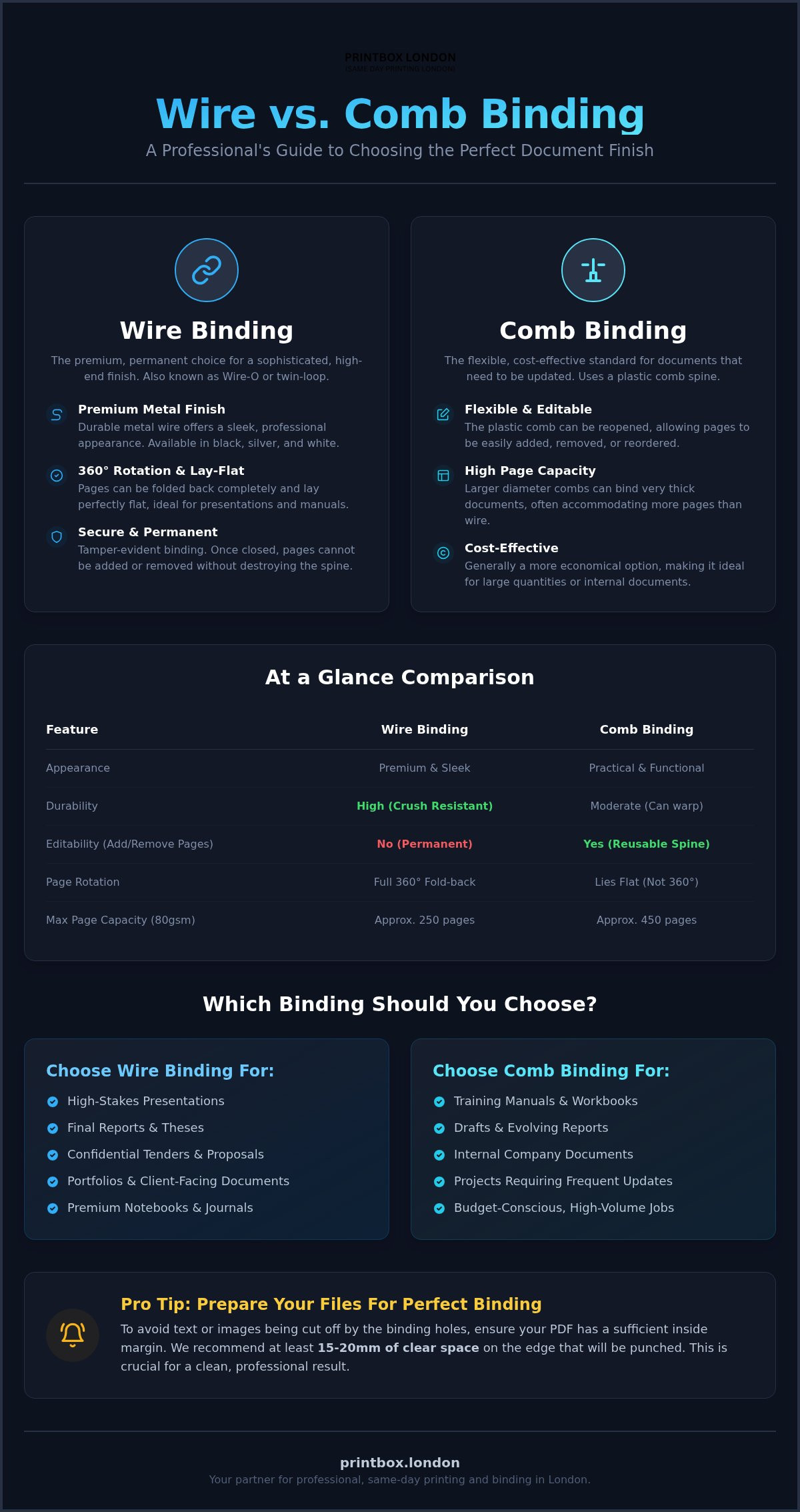
Capacity is where comb binding truly outperforms other methods. Whilst standard wire binding is typically limited to around 250 pages, plastic combs can comfortably secure documents up to 450 pages or more. This makes it the essential choice for comprehensive technical dossiers or large-scale Manual Printing projects.
Larger documents are heavy. A thick plastic comb provides better weight distribution along the spine, preventing the pages from tearing under their own bulk. For these thicker volumes, we can also offer customisation that wire cannot match. On larger comb diameters, there is enough surface area to print titles or reference numbers directly onto the spine. This allows your documents to be easily identified when stored on a shelf, a feature that is incredibly useful for training archives or reference libraries.
If you are producing high-volume internal training manuals or quick-turnaround draft reports, the cost-efficiency of comb binding is hard to beat. It provides a clean, organised look that is functional and easy to handle. It doesn't try to be a luxury item. It is a high-performance tool designed for active, busy environments where speed and utility are the top priorities.
Head-to-Head: Durability, Cost, and User Experience
Choosing between wire binding vs comb binding comes down to the environment where your document will live. If your report needs to survive years of reference on a library shelf, wire is the superior choice for longevity. For high-volume internal drafts where cost-per-unit is the primary driver, comb binding offers a budget-friendly alternative that doesn't compromise on organisation. The visual impact also changes with your paper choice. Heavy 300gsm silk covers pair naturally with the industrial feel of metal wire, whilst standard 80gsm bond paper is perfectly suited to the classic look of a plastic comb. Matching the spine to the paper weight ensures the document feels balanced rather than flimsy or over-engineered.
Sector-Specific Recommendations
Different industries have distinct requirements for their printed materials. We see these patterns daily at our North London shop, where the choice often depends on the specific professional setting:
- Architects and Planners: Wire is the non-negotiable choice for site plans and technical drawings. The ability to lay the document perfectly flat on a drafting table or fold it back 360 degrees is essential for accuracy on-site.
- Students: We specialise in university submissions. We always recommend wire for your final dissertation to meet strict academic standards. However, for large sets of lecture notes or revision guides, comb binding is more practical and easier to store.
- Hospitality: If you need Same day menu printing London, your choice depends on your menu cycle. Wire provides a permanent, high-end feel for wine lists, whilst combs allow you to swap out daily specials or seasonal pricing with ease.
Durability in Transit
How you transport your work matters as much as how you present it. Metal wire holds its circular shape even when squeezed in a tight briefcase or laptop sleeve. It provides a level of structural integrity that keeps the pages aligned during a busy commute on the Underground. Plastic combs, however, have a tendency for their "teeth" to snag on other documents or loose threads in a rucksack. This can lead to the spine partially opening if handled roughly. Whilst wire is more robust, plastic is more flexible under pressure and won't permanently deform if the document is accidentally bent in half. If you are still unsure which finish fits your deadline, our team can help you decide. Order your professional binding today and get your documents ready for collection in hours.
Choosing the Right Binding for Your London Project
London moves fast. A missed deadline is a lost opportunity. When you're deciding between wire binding vs comb binding, the final factor is often how quickly you can get the finished product into your hands. Whilst online-only competitors offer next-day delivery, a local solution means you can have your reports bound and ready for a meeting in just a few hours. This immediacy is why we prioritise same-day service at our North London hub. Local collection from West Green Road beats waiting for a courier stuck in city traffic every time.
Preparing Your Files for Binding
To ensure a professional result, your PDF must be set up correctly. The most common mistake is ignoring the "gutter" margin. This is the extra space on the left side of the page where the holes are punched. We recommend a minimum margin of 10mm to 15mm. This ensures your text doesn't get caught in the loops or hidden by the plastic spine. If you're unsure about your layout, our Same Day Printing London guide offers specific tips for urgent file preparation.
Finishing touches are just as vital as the binding itself. A professional document needs protection. We recommend a clear acetate front cover to showcase your title page whilst keeping it smudge-free. For the back, a heavy card backing provides the rigidity needed for easy handling. These small additions transform a simple printout into a durable, executive-level document that stands up to frequent use.
The Printbox London Advantage
We act as your "Reliable Local Fixer" for all print emergencies. Whether you need a single thesis bound or fifty corporate reports, we have the high-capacity equipment to handle it on-site. You don't have to guess when your work will arrive. Collection from our shop in North London puts you back in control of your schedule. You can upload your files online and collect your finished work the same afternoon.
We don't just print; we ensure your work is finished to the highest standard. From crisp digital colour to precise mechanical binding, we handle the technical details so you can focus on your presentation. Get your documents wire or comb bound today at Printbox London and experience the speed of a truly local service. Our team is ready to help you meet that urgent deadline with a finish that commands respect.
Finish Your Project With Confidence
The right finish transforms a simple stack of paper into a professional asset that commands respect. When you evaluate wire binding vs comb binding, remember that wire delivers a permanent, premium look for final submissions; whilst plastic combs offer the flexibility required for working drafts and thick manuals. Both systems ensure your work stays organised and easy to handle. Just ensure you've allowed for the correct gutter margins during file setup to keep your content clear.
At Printbox London, we understand the pressure of city deadlines. We provide a same-day turnaround for urgent reports and expert advice on finishing and paper weights. Our convenient North London location makes collection fast and straightforward. Don't settle for a finish that looks cheap when your reputation is on the line. We are here to help you cross the finish line with a document you can be proud of.
Order your professional document binding at Printbox London and get the expert results your hard work deserves. We're ready to help you meet your next deadline with ease.
Frequently Asked Questions
Can I add pages to a wire-bound document later?
No, you cannot add pages to a wire-bound document once the metal spine has been crimped shut. If you need to update your data or insert new sections, the original wire must be cut and removed, requiring a complete rebinding of the project. If your document is likely to change, we recommend opting for comb binding instead, as the plastic teeth can be safely reopened for updates.
Which binding is better for a university dissertation or thesis?
Wire binding is almost always the preferred choice for a university dissertation or thesis. Most academic institutions in London require a permanent, professional finish that prevents pages from being easily removed or swapped. The sleek metal loops provide a high-end aesthetic that signals the importance of your research. We specialise in thesis and dissertation binding, ensuring your hard work meets the necessary submission standards with a durable, sophisticated finish.
Does wire binding or comb binding cost more?
In the debate of wire binding vs comb binding, plastic combs are generally the more cost-effective option for high-volume internal documents. Wire binding involves a slightly higher production cost due to the metal materials used and the precision required for the closing process. However, the investment in wire is often justified for external presentations or final reports where the professional impression and increased durability are critical to the project's success.
Which binding method allows the document to lie completely flat?
Both methods allow a document to lie flat on a desk, but wire binding offers the significant advantage of 360-degree rotation. This means you can fold the book completely back on itself, which is vital for technical manuals or presentations in limited spaces. Whilst a comb-bound book stays open, it cannot be folded back without risking damage to the plastic spine. Wire remains the standard for hands-free reading and active use.
What is the maximum number of pages I can bind with a plastic comb?
Plastic combs are designed for high-capacity projects and can comfortably secure documents up to approximately 450 pages. This far exceeds the typical limit for standard wire binding, which usually caps out around 250 sheets. If you are producing thick training manuals or extensive technical dossiers, the plastic comb is the most practical choice. It provides the necessary structural support to keep a heavy volume organised without the holes tearing.
Can I choose different colours for my wire or comb spines?
Yes, you can choose from a variety of colours to match your corporate branding or cover design. We typically stock black, white, and silver for wire spines to maintain a professional look. For plastic combs, black is the industry standard for its clean appearance, but other options are often available for larger runs. Selecting a coordinating spine colour is a simple way to elevate the overall design of your bound reports or presentations.
How much margin should I leave for binding punch holes?
You should leave a gutter margin of at least 10mm to 15mm on the binding edge of your PDF. This ensures that the punch holes do not cut through your text, diagrams, or page numbers. When you are comparing wire binding vs comb binding, both require this extra clearance to remain functional. Setting your margins correctly before printing prevents the frustration of unreadable content and ensures a clean, professional-looking finished product.
Is same-day binding available for collection in London?
Yes, same-day binding is available for local collection from our shop at 52 West Green Road in North London. We specialise in urgent digital printing and finishing, allowing you to upload your files and have your bound documents ready in just a few hours. This fast-turnaround service is ideal for meeting tight business deadlines or university submission windows without the delay and uncertainty of waiting for a courier delivery.