
Stapled Booklet Printing Near Me in London: Prices and Timing
Oct 22, 2026
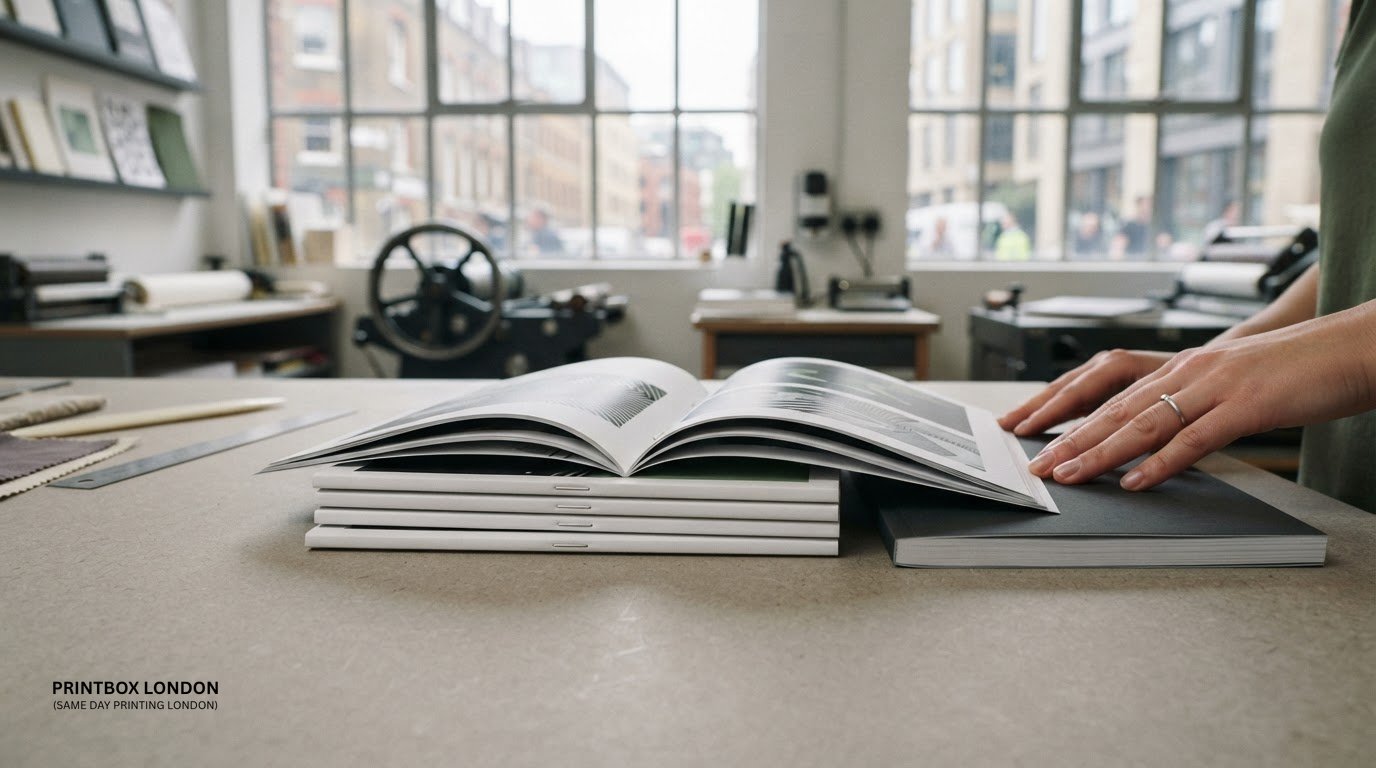
Booklet deadlines depend on the quantity and specification. Same-day printing is available for selected quantities and specifications, while page count, artwork and finishing also affect the schedule.
If you’re planning a launch, event or presentation, both timing and finish matter. A stapled, saddle-stitched booklet suits a compact publication, while perfect binding creates a different look for longer documents. Choose a format that fits how the booklet will be used, opened and handled.
This guide explains what can affect production time and cost, how to prepare artwork, and how saddle-stitched and perfect-bound booklets compare. You’ll also see which details to prepare when arranging a London print job, helping you choose a suitable format and plan your next step.
Key Takeaways
- Compare the listed 2-working-day and 3-4-working-day turnaround options with your deadline before choosing a format.
- See how booklet quantity, size, material and finishing can influence the quote.
- Learn when a saddle-stitched booklet suits a shorter publication and how perfect binding differs.
- Find out which order details and artwork information help move a booklet job forward.
- Understand how collection and delivery arrangements fit into planning a London print job.
When Will I Receive My Stapled Booklet Printing?
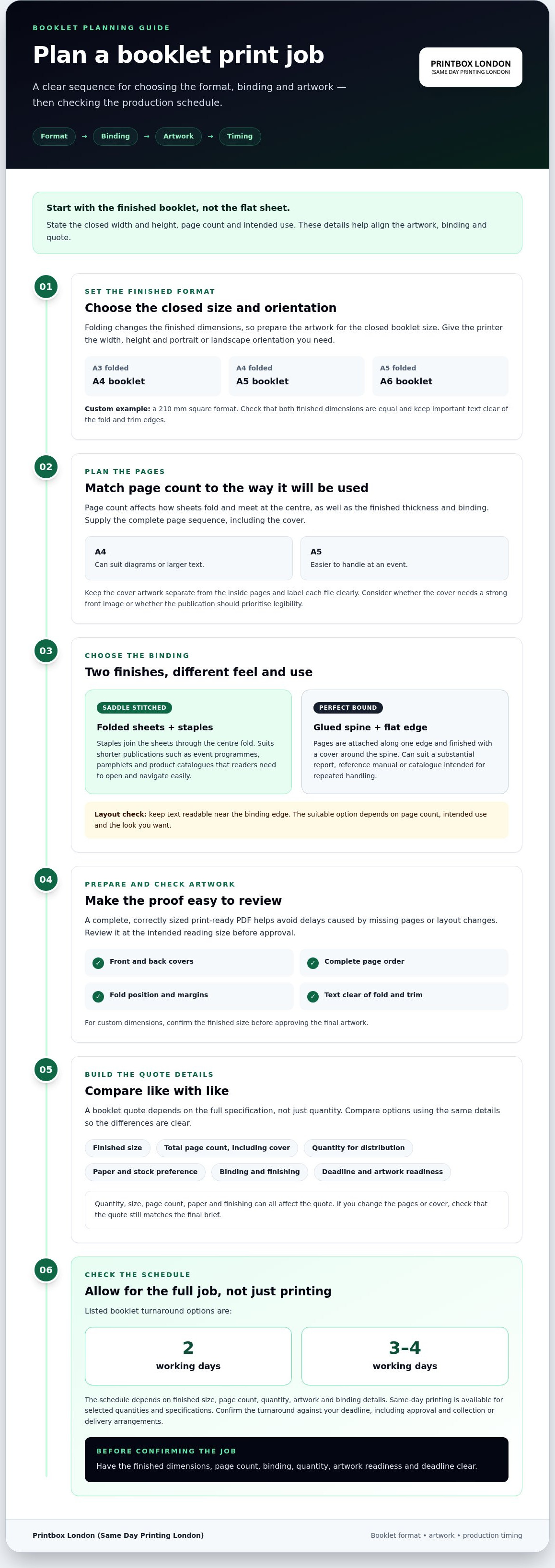
Listed turnaround options are 2 working days and 3-4 working days. The time depends on finished size, page count, quantity, artwork and binding details. A complete, correctly sized print-ready PDF helps avoid delays caused by missing pages or layout changes. Set your deadline against the full job, including approval and collection or delivery arrangements.
Before choosing a booklet printer near you, confirm the turnaround, finished dimensions, page count and binding method. Explain your deadline, artwork readiness and any custom sizing when requesting a quote. These details help establish whether the proposed booklet fits your schedule and intended use.
Start with the finished page size, rather than the flat sheet size. A common format is A3 folded to A4; A4 folded to A5 creates a smaller hand-held booklet. A5 folded to A6 gives a compact format for concise marketing material. Each fold changes the final dimensions, so prepare artwork for the closed booklet size.
Custom sizing can suit a project that needs a different shape or layout. A 210 mm square format is one possible magazine size. For a square booklet, check that the finished dimensions are equal and that important text stays clear of the fold and trim edges. Give the printer the width, height and orientation you need.
Page count and format should work together. An A4 booklet may suit diagrams or larger text, while A5 is easier to handle at an event. A6 can work for a short guide or compact programme. Page count affects how sheets fold and meet at the centre, so supply the complete page sequence before production.
Consider the role of the cover, too. A marketing brochure may need a strong front image and clear title; a practical guide may prioritise legibility. Ask which cover and internal-page combinations suit your size and binding. Keep cover artwork separate from the inside pages, and label each file clearly.
Review the proof at its intended reading size. Check the front and back covers, page order, fold position and margins. For example, a heading too close to the centre fold can be awkward to read. If the booklet has custom dimensions, confirm them before approving the final artwork.
For a custom booklet, state the closed width and height in your artwork brief. Specify portrait or landscape orientation, and make sure the cover uses the same orientation. This gives the production team a clear reference for checking the file against the finished format.
Booklet printing costs and quantity
A booklet quote depends on the full specification, not just quantity. A short run for a small meeting differs from a larger distribution run, and both the total cost and cost per copy can change with quantity. Compare quotes using the same finished size, page count, paper and finishing to make a fair comparison.
Quantity determines how many copies are produced from the same artwork. A proof copy can help you check the layout before a wider run. A larger run may suit an event with more attendees, but base the quantity on expected use. Avoid ordering extras without a clear distribution plan.
Format and page count shape the production requirements. A compact booklet needs a different layout from a larger publication. More pages mean more printed content and can affect the finished thickness and binding. Paper choice matters as well: thicker stock changes the material requirements and can affect how the pages fold and sit together.
- The finished size, such as A4, A5 or a custom format.
- The total page count, including the cover.
- The quantity you need for the intended distribution.
- Your preferred paper and whether you’re considering thicker stock.
- The binding and any other finishing requirements.
- Your deadline and whether the artwork is ready to print.
These details help distinguish specifications that might otherwise sound similar. For example, two A5 catalogues can differ in page count, paper and cover requirements. If you’re considering different formats, describe the purpose of each version. Then compare the quotes against the same content and finishing wherever possible.
The price depends on the job specification. Send a print-ready PDF where possible, with pages in reading order and the intended finished size stated. Include the quantity, paper, page count and finishing details in your quote request, so the requirements are clear.
Before approving a quote, check that it matches your intended booklet. Confirm the quantity, finished dimensions, page count, paper and binding against your final brief. If you add pages or change the cover, ask for an updated quote. This keeps the agreed job and budget aligned.
Saddle-stitched and perfect-bound booklets
Saddle stitching and perfect binding produce different finishes. Saddle-stitched booklets use folded sheets joined through the centre fold with staples. Perfect-bound booklets have a glued spine and a flat, squared edge. The right option depends on page count, intended use and the look you want.
For a short event programme, pamphlet or product catalogue, saddle stitching keeps construction simple. The sheets fold together, with staples holding them along the spine. It suits publications with fewer pages that readers need to open and navigate easily, including course handouts intended for temporary use.
Perfect binding creates a more book-like appearance. Pages are gathered and attached along one edge, then finished with a cover around the spine. This format can suit a substantial report, reference manual or catalogue intended for repeated handling. Depending on the design, the spine can also carry a title.
Think about how the booklet will be used. A short programme handed out at an event may need a light, easy-to-open finish. A training manual kept on a desk may benefit from a firm spine and a cover that holds its pages together. For a frequently used course workbook, keep the layout readable near the binding edge.
Page count affects the choice because each binding method handles the finished stack differently. Saddle stitching gathers folded sheets at the centre, so the inner pages may sit slightly proud of the outer cover. This is called creep. Allow for it in the artwork by keeping text and important details away from the trim edges.
Perfect binding has a flat spine, but the artwork must account for its width, which changes with the page block and paper thickness. Keep the title and imagery within the front and back cover panels unless the finished spine dimensions are known. Where the layout requires it, provide a print-ready PDF with cover artwork separate from the inside pages.
Before deciding, prepare the page count, finished size, intended use and artwork. Compare binding options by how the booklet should open, sit and be handled. A compact event pamphlet and a substantial reference manual, for example, may need different finishes even if they contain similar information.
For a London project, booklet and brochure printing covers publications such as programmes, catalogues and manuals. Match the binding to the purpose first; then prepare the artwork for that format.
Same-day booklet and brochure printing in London
Same-day booklet printing can help when a London event, launch or meeting is approaching. Availability depends on the quantity, finished format, materials, artwork readiness and finishing. A short, straightforward brochure with a print-ready file differs from a large catalogue that needs extensive checks. Share the details early so the schedule can reflect the job.
Listed booklet turnaround options include 2 working days and 3-4 working days. Same-day production is a separate urgent option, not another way of describing either schedule. A job’s timing can change with its page count, size, finishing, workload and the time the order is confirmed. Build in time for proof approval if the artwork needs changes.
For a deadline today, prepare the final PDF before arranging printing. Check the finished size, page order, cover, colours and images. For example, confirm the running order and venue details in an evening event programme before production. A late change to one page can affect the whole file and delay approval.
Bleed is artwork that extends beyond the trim edge to allow for small shifts when pages are cut. Follow the printer’s template for the required bleed rather than assuming one setting suits every booklet. Keep text and logos inside the safe area, and make sure essential details do not cross the centre fold or sit too close to the staples.
For an affordable result, match the specification to the job instead of adding features readers won’t use. A brief event handout may need fewer pages than a product catalogue. A company brochure may call for full-colour images, while a text-led guide can prioritise clear headings and readable body text. Each choice affects the production requirements and quote.
Before placing an urgent order, organise the key information in one message:
- State the finished size, page count and number of copies.
- Describe the binding and any cover or finishing requirements.
- Attach the final artwork and flag any pages needing special attention.
- Give the required collection or delivery deadline and London destination.
Same-day printing is available for selected quantities and specifications. Timing depends on the quantity and job requirements. A ready-to-print file for a simple booklet can move more directly through production than a job requiring artwork corrections or complex finishing. Consider the full specification when planning the turnaround for a larger or more involved order.
A same-day request is easier to assess when the format, artwork and deadline are clear from the start. Share the final file, quantity, size and binding details together. This gives the printing team the information needed to assess the job and schedule production.
Can I collect booklets locally, and what are the delivery or collection options?
Plan collection or delivery alongside the print deadline. The handover affects where the finished booklets need to be and when they must arrive. Set the destination first, then choose an arrangement that fits your event, workplace or home. For example, a booklet needed at a venue should be routed there, rather than left for a last-minute transfer across London.
For collection, allow time to travel from the collection point to your final destination. Keep the job reference, order name and expected quantity together so the correct print job can be identified at handover. If a colleague is collecting, share the same details and collection instructions to avoid confusion when coordinating a launch or event.
For delivery, provide a complete London address and a named recipient. Include useful access details, such as a reception desk or delivery point, in the order information. A booklet run for an office meeting, for instance, may need to reach reception before staff distribute the copies. Make sure the recipient knows to expect the package.
Booklets can be damaged if they shift, bend or get wet in transit. Carry smaller quantities in a stable folder or box, and keep them flat where possible. For a larger event run, plan who will move the packages from the delivery point to the room. A simple handover plan helps prevent booklets being left in the wrong place.
Before arranging collection or delivery, write down:
- The destination and the person responsible for receiving the booklets.
- The event or meeting start time, allowing for transport after handover.
- The quantity of packages and who will carry or store them.
- Any access details needed at the address or venue.
- A backup contact who can respond if the recipient is unavailable.
Keep the schedule realistic: the print deadline is not the same as the time the booklets must arrive. Allow for travel and handover, especially for a London event with a fixed start time. If the address changes, update the delivery details before dispatch.
For collection, make sure the person travelling knows where and when to collect. For delivery, ensure someone is available to receive the order. Agreeing these practical details early connects the finished print job with its intended use, whether for a course, presentation or public event.
Printbox London (Same Day Printing London): Same Day Printing
Printbox London (Same Day Printing London) provides same-day printing for customers working to urgent deadlines. Same-day poster, flyer and business card printing are among the available services. Turnaround depends on the job’s quantity, specification, artwork readiness and production requirements.
For a booklet project, share the finished size, page count, quantity, binding details, print-ready artwork and deadline when you get in touch. These details clarify the job and help establish its timing. A complete PDF also makes it easier to spot layout points that need attention before printing.
Need urgent printing in London? Contact Printbox London (Same Day Printing London) to discuss your project and next steps.
Turn your booklet idea into a print-ready job
Turn your project into a clear brief. Decide who will read the booklet, what they need to take away and how they’ll use it. This helps you choose a format and finish that suit the content, rather than adding features without purpose.
If you’re looking for stapled booklet printing near you in London, prepare your artwork and key job details before getting in touch. A print-ready file and clear specification make it easier to discuss the right approach for your project.
A well-planned booklet gives your message a practical format that readers can keep and use. When you’re ready, take the next step and move your project towards print.
Frequently Asked Questions
What are stapled brochures and why are they so popular?
Stapled brochures are booklets held together with staples through the centre fold, a method also called saddle stitching. Their straightforward construction suits event programmes, short product guides and community newsletters. An organiser, for example, can use one to share a schedule and venue information in a compact handout. The format keeps related pages together without the thicker spine of a perfect-bound publication.
How quickly will my stapled booklets arrive?
Booklet schedules depend on the order’s page count, quantity, materials, finishing and artwork readiness. Listed turnaround options include 2 working days and 3-4 working days. Same-day printing is available for selected products and specifications, but booklet timing depends on its requirements. Include your deadline and delivery or collection preference with the job details so the schedule can account for the complete order.
Looking for Booklet Printing Near You?
For stapled booklet printing near you in London, Printbox London (Same Day Printing London) serves customers across Greater London from its Tottenham shop at 52 West Green Road. Collection is available once an order is confirmed ready. If you’re organising a local event, prepare the finished size, quantity and artwork, then plan the handover around your venue’s schedule.
What are the minimum and the maximum number of pages required for making stapled booklets?
A stapled booklet is assembled from folded sheets, so its page count follows how those sheets are printed and folded. There is no single maximum that suits every paper choice and finished format. Thicker paper takes up more space at the fold and affects how the booklet sits. Decide what content needs to fit, then make sure the page plan suits the binding and paper specification.
Where can I get stapled booklets printed near me in the UK?
In London, Printbox London (Same Day Printing London) provides booklet printing, with collection from its Tottenham shop once the order is confirmed ready. Customers in Greater London, including Central, North, East, South and West London, can arrange local courier delivery, subject to postcode, job size, completion time and courier availability. Prepare your artwork, finished dimensions, quantity and deadline so you can describe the job clearly.
Which local printers offer same-day or next-day booklet printing?
Printbox London (Same Day Printing London) offers same-day printing for selected quantities and specifications. For booklets, the page count, materials, finishing and artwork affect the production schedule. Next-day timing also depends on the agreed job requirements. If your event is close, state the date the booklets must be in hand, rather than only when you hope to place the order.
How much does stapled booklet printing cost in the UK?
Booklet costs depend on quantity, finished size, page count, paper and finishing. A small, simple programme and a larger illustrated catalogue have different production requirements, so compare quotes using the same specification. Include the cover, inside pages and binding details in your request. To get a price for your booklet, send the job details and request a quote.
What booklet sizes, paper types and cover options are available?
Booklet formats can include A4 folded to A5 and A5 folded to A6, with custom sizing suited to the artwork and use. Paper and cover choices depend on the project specification. For instance, a guide with photographs may need different design decisions from a text-led handout. Supply the intended finished size and explain how readers will use the booklet when arranging its print.
Article by
Printbox London Team
The Printbox London (Same Day Printing London) team provides practical printing guidance based on real customer requirements and day-to-day print production. We serve customers across Greater London from our Tottenham print shop, with same-day printing available for many products depending on quantity, specification, artwork and production capacity.