Round product label printing in the UK: compare formats and costs
Nov 08, 2026
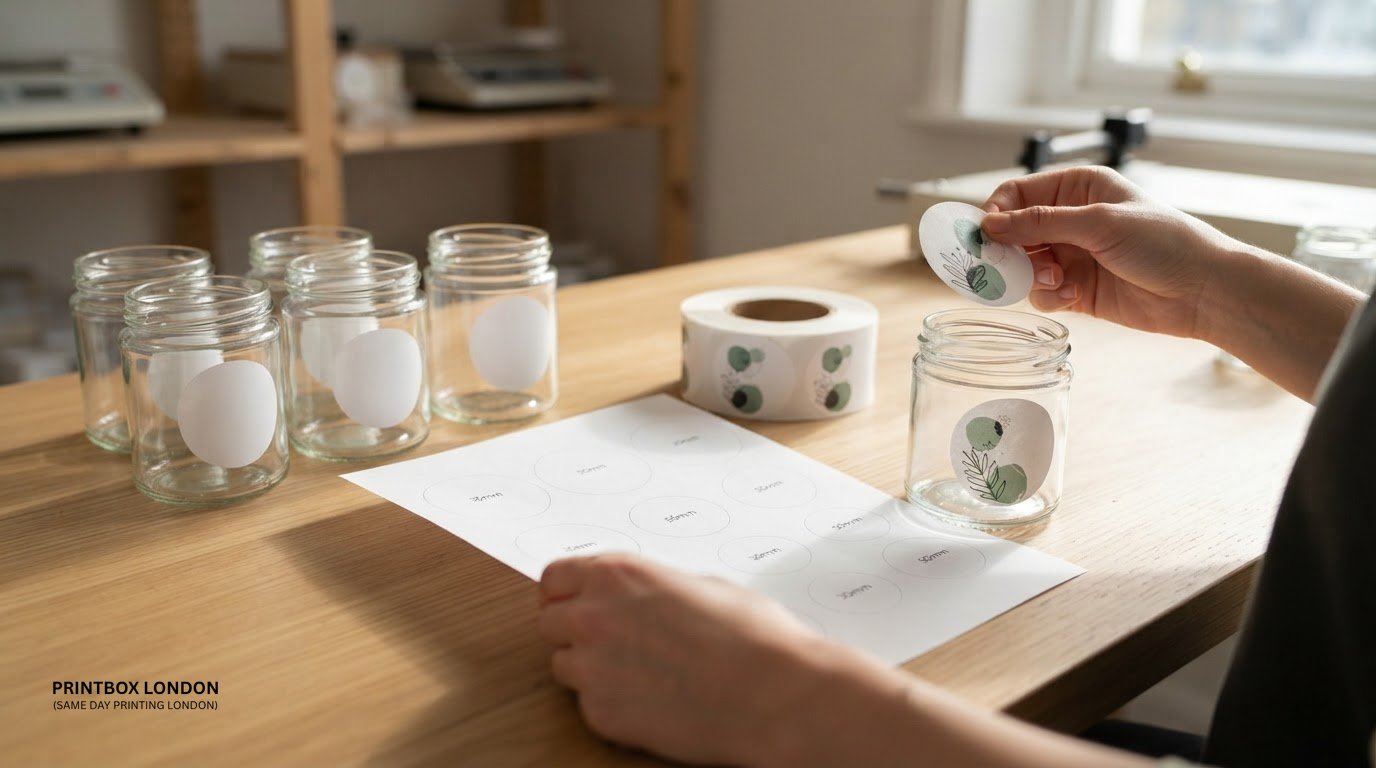
Round labels aren’t automatically cheaper than labels in other shapes. For round product label printing in the UK, cost depends more on size, quantity, format and artwork than on the circular shape alone.
If you’re choosing between sheets and rolls, or selecting labels for packaging, promotions or personal projects, those details can affect which option suits your order. Larger quantities on rolls can be more cost-effective than smaller quantities on sheets, but the right format also depends on how you’ll apply and use the labels.
This guide explains the differences between rolls, sheets and individual labels, what to consider when choosing a diameter, and how artwork affects production. You’ll get a clear overview of the decisions that shape your order, so you can choose a practical format before requesting a quote.
Key Takeaways
- Choose between rolls, sheets and individual labels based on how you’ll store, peel and apply them.
- Match the label diameter to the available packaging space and the amount of information your design needs to show.
- Compare quantities as well as formats: larger roll orders can be more cost-effective than smaller sheet orders.
- Prepare artwork at the intended finished size, with text and important details positioned safely inside the cut edge.
- Use size, quantity, format and artwork requirements to make a more informed choice before requesting a quote.
Roll, sheet and individual label formats
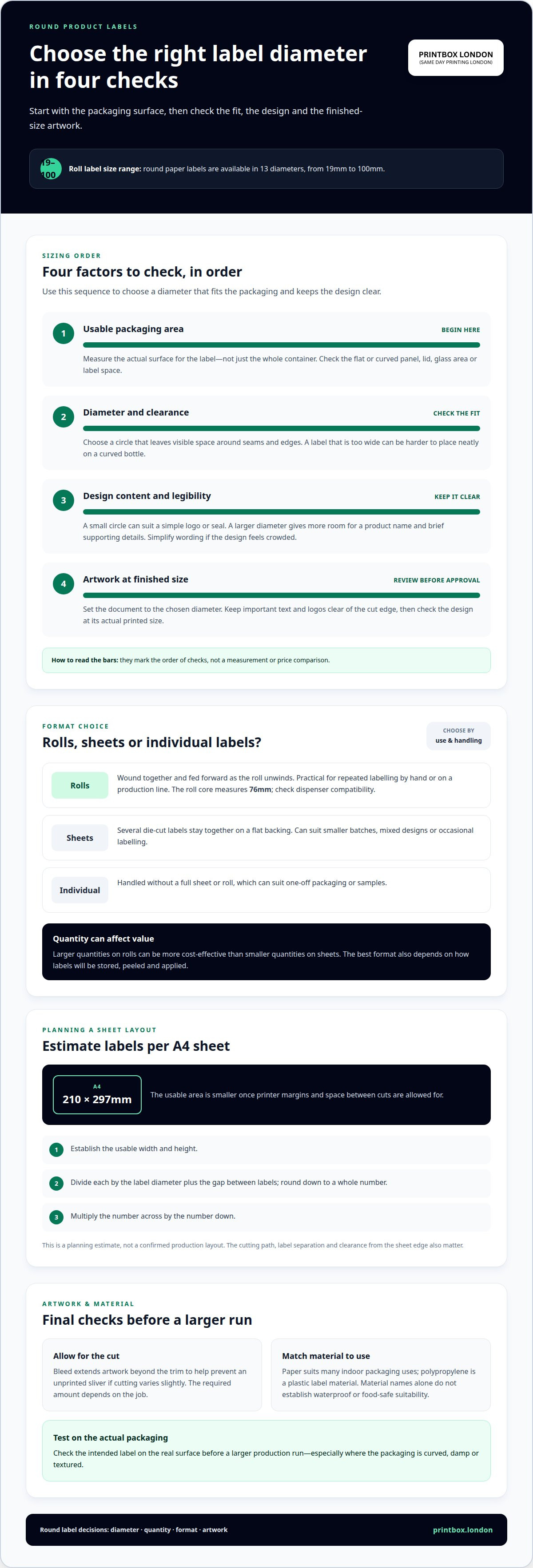
Format affects storage, handling and application. Roll labels stay wound together, making them practical for repeated labelling on a production line or by hand. Printed round labels on a roll use white semi-gloss adhesive paper, with semi-gloss permanent adhesive and polypropylene plastic permanent adhesive among the material options. The roll core measures 76mm, a useful detail when checking dispenser compatibility.
Sheet labels keep several die-cut shapes together on a flat backing. Blank round labels are also sold by the sheet, ready for handwriting or use with a compatible printer. Sheets can suit smaller batches, mixed designs or occasional labelling. For example, a maker preparing a short run of gift jars can peel off each label as needed without storing a roll.
Die-cut edges separate each round label from its backing, making it easier to peel off for application. On sheets, labels stay arranged on the backing until removed; on rolls, they feed forward as the roll unwinds. Individual labels are handled without a full sheet or roll, which can suit one-off packaging or samples. Choose a format based on how many labels you’ll apply, how often you’ll use them, and whether equipment is involved.
Matte finishes reduce shine, while gloss creates a brighter surface effect. Foil adds a metallic detail, such as silver lettering, and laminate adds a protective layer over printed artwork. These are different visual or surface treatments, not interchangeable options, and the combination you choose affects the final look.
Online ordering can make it easier to specify a format and upload artwork; a local printer can discuss the job with you directly. In either case, compare the same details: finished diameter, material, finish, quantity, artwork preparation, and collection or delivery arrangements. A clear specification makes quotes easier to compare, without assuming a low headline price covers the same work.
Paper suits many indoor packaging uses, while polypropylene is a plastic label material. Vinyl, waterproof and food-safe are separate claims, not automatic properties of every label. Match the material to the packaging surface and conditions, including moisture or outdoor exposure. Food packaging needs a label specification suited to its intended use; a material name alone doesn’t establish that suitability.
The wrong adhesive can lift from curved, damp or textured surfaces, while an unsuitable material can wrinkle, tear or lose its appearance during application. Test the intended label on the actual packaging before a larger production run. For printed round designs, circle sticker printing provides a related format to consider.
Custom label sizes and diameters
For round product label printing in the UK, start by measuring the usable packaging area. Diameter determines the label’s width and height, so allow space around seams, lids and edges. Round paper labels on rolls come in 13 sizes, with diameters from 19mm to 100mm. This range can suit small seals or larger front-facing product labels.
Measure the surface, not just the whole container. A wide label can be harder to position neatly on a bottle’s curved body, while a jar lid provides a flat circle. For a window sticker, consider the clear glass area and surrounding frame. A label sized to the available panel is easier to apply and less likely to overlap an edge.
Next, decide what the design needs to show. A small circle can work for a simple logo or seal. A larger diameter gives more room for a product name and brief supporting details. Keep essential text readable at the finished size. If the design feels crowded, simplify the wording rather than shrinking every element.
Use this sizing sequence:
- Measure the flat or curved area intended for the label.
- Choose a diameter that leaves visible space from seams and edges.
- Centre the logo and main wording within the circular layout.
- Review the design at its actual printed size before approval.
Custom round sticker sizes can help when packaging doesn’t suit a standard diameter. A bespoke circle may fit a narrow label panel or distinctive lid more effectively. The finished size still needs to balance available space, legibility and ease of application. For example, avoid a bottle label so wide that its edges nearly meet around the curve.
Set the artwork document to the chosen finished diameter. Keep logos and important text clear of the cut edge. Bleed means artwork extends beyond the trim, helping prevent an unprinted sliver if cutting varies slightly. The required amount depends on the job, so prepare the file to the supplied print specification.
For round product label printing in the UK, include the diameter, packaging shape and artwork when requesting a quote. These details show how the label will be used and where it needs to fit. A print-ready PDF at the intended size also gives a clearer view of the layout than a low-resolution screenshot.
If you’re still deciding between a standard and custom diameter, base the choice on the packaging panel and the amount of text. Share those details with your artwork and discuss your label dimensions through the contact form.
Label diameters and quantities per A4 sheet
Work out a sheet quantity from the layout, rather than guessing from the label diameter alone. An A4 sheet measures 210 × 297mm. The usable area is smaller once the printer’s margins and the space needed between cuts are allowed for.
To estimate a simple grid, first establish the usable width and height. Divide each by the label diameter plus the gap between labels, then round down to a whole number. Multiply the number across by the number down. This is a planning estimate, not a confirmed production layout.
The calculation needs to account for the cutting path, not just the visible circles. Labels need separation so adjacent cuts don’t overlap, and the outside row needs clearance from the sheet edge. These production spaces reduce the area available for labels, even when the artwork itself fits.
For a quick estimate, use this method:
- Start with the A4 width and height: 210mm × 297mm.
- Subtract the required outer margins to find usable dimensions.
- Allow for the gap between labels in both directions.
- Divide the usable dimensions by the label diameter plus the gap.
- Multiply the whole-number row and column results.
To estimate how many sheets an order needs, divide the requested quantity by the number of labels per sheet. Round up to the next whole sheet, since a partial sheet can’t be ordered as a complete one. This helps with stock planning, but the final count depends on the production layout.
Artwork placement can also affect the usable arrangement. If each label has a different design, the sheet needs to preserve the intended sequence and orientation. Repeated designs are simpler to impose because each position uses the same artwork. Confirm whether the sheet should contain one repeated design or several versions.
Ask for the final layout count alongside the finished diameter and sheet quantity. That makes it clear whether the order quantity means individual labels or complete A4 sheets. It also avoids comparing a per-sheet figure with a total-label figure when reviewing a print specification.
These figures describe broader context, but they do not change the sheet calculation: the finished label diameter and production clearances still determine how many positions fit. The page reports that round stickers are used by 72% of businesses. Round labels on a roll have a 76mm diameter core, which is a roll specification rather than the diameter of a label. The page also reports that the European stickers market reached £1.18 billion in 2025; that market figure does not set an A4 sheet yield.
Round labels for business and personal use
Round labels suit business packaging and personal projects because their shape works well for seals, logos and short messages. A bakery might use one to close a paper bag, while a small maker could add one to a box as a finishing detail. At home, the same format can personalise favour bags, storage jars or handmade gifts.
For product packaging, decide what the label needs to do before choosing its design. A brand mark needs clear contrast and breathing room. A seal should sit across the opening without hiding important information. A promotional label may need a short offer or event message, so avoid squeezing several lines into a small circle.
Packaging surfaces affect the result. A flat cardboard box offers a different application area from a curved bottle or textured paper bag. On a curved surface, a large circle can approach the sides and become harder to position neatly. Match the diameter to the flattest usable area, then test a label on the actual packaging.
Adhesive choice matters too. Permanent adhesive is intended to stay attached, while tack describes how readily a label grips during application. The term alone doesn’t define performance on every surface. Dust, texture, curvature and moisture can all affect contact. Apply a sample to clean packaging and check its edges after handling.
Waterproof and durable aren’t universal properties of round labels. A label exposed to condensation, splashes or outdoor conditions needs a suitable material and adhesive combination. A paper label may suit a dry product box, while a plastic label may be more appropriate where moisture is expected. Match the specification to actual use, not just the product description.
Personal projects often call for a different balance. A gift label might prioritise colour and a name; a wedding favour could feature a date or initials. For a small batch, a simple design makes each label quick to apply. Leave enough clear space around the wording so the circular edge doesn’t crowd the message.
A round shape also changes how artwork reads. Centre the logo or main message, then arrange secondary details around it. Text set close to the edge can feel cramped, especially on a small label. Check the design at actual size before printing, rather than relying on an enlarged screen preview.
A square label can offer more room for long wording, while a circle creates a compact, softer outline. Choose based on the packaging shape and message, not habit. For a business, consistency across boxes, bottles and promotional materials can make the brand easier to recognise. For personal use, one carefully placed label can make a plain package feel ready for its occasion.
Typical UK prices for custom round labels by size and quantity
There isn’t one typical price for every custom round label order. The total depends on the specification, including diameter, quantity, material, format and artwork. A small batch of labels on sheets is a different job from a larger roll order, so compare quotes using the same requirements.
Quantity affects the cost calculation. Larger quantities of labels on a roll can be more cost-effective than smaller quantities supplied as stickers on sheets. That doesn’t mean a roll is always the right choice. A short-run business launch, for example, may need fewer labels and suit sheets better, avoiding an order larger than needed.
Size matters because it changes how much label material each circle uses and how the layout is produced. A larger diameter may suit a prominent logo on packaging, while a smaller one can work for a simple seal. Compare the same finished size across quotes; otherwise, a lower total may simply reflect smaller labels.
Material and finish also affect the specification. Paper and polypropylene plastic are different label options, so identify the material required for each order. If you want a particular surface effect, name it clearly. Don’t compare a plain label with one carrying extra finishing as though they were identical.
Artwork can affect the production process. A correctly prepared file at the intended finished size gives the printer a clear design to work from. If the artwork needs adjustment, that can change what the job involves. Include the file with your quote request and describe any changes needed, rather than comparing a print-ready order with a design job.
Check what each quoted total includes. Published prices for round labels may exclude VAT and delivery where applicable, so compare the stated total and any additional charges before deciding. Request the same format, quantity, diameter, material and finish in each quote. That makes the comparison useful instead of relying on a headline figure alone.
The price depends on the order and is provided after a quote request; key cost factors include quantity, size, material, format, finish and artwork requirements. For an accurate comparison, provide those details together and state whether you need sheets or rolls. This also helps distinguish a small trial order from repeat packaging stock.
New customers can get 15% off their first order by registering, which may help reduce the initial cost when ordering custom round labels.
Printbox London (Same Day Printing London): Product Label Printing
Printbox London (Same Day Printing London) prints product labels and round stickers for packaging, promotions and other labelling needs. Send the finished diameter, quantity, preferred material, format and artwork to specify the job clearly.
Same-day printing is available for selected quantities and specifications. Artwork readiness, size, material, stock and workload can also affect turnaround. Share your deadline when you enquire, especially for larger or more involved orders.
A print-ready PDF prepared at the intended size helps show how the design will sit within the circular cut. Include important layout details, such as text that needs clear space from the edge. Printbox London (Same Day Printing London) can discuss your label requirements and next steps.
Have your label size, quantity and artwork ready? Contact Printbox London (Same Day Printing London) to discuss your order.
Turn your label brief into a print-ready order
Give your design a clear next step: decide where the label will sit, what it needs to communicate and how it should look on the finished packaging. A tidy brief makes it easier to move from an idea to an order, especially when the label supports a product launch or upcoming promotion.
For round product label printing in the UK, share the artwork alongside your chosen size, format and quantity. Printbox London (Same Day Printing London) also offers same-day poster and flyer printing, alongside same-day printing for many products. Turnaround depends on the order’s quantity and specification.
A clear brief is a practical starting point. You’re ready to move your round-label idea forward.
Frequently Asked Questions
Are round stickers cheaper than other shapes?
Not necessarily. Shape alone doesn’t determine the final cost, and a low total may cover fewer usable labels. Compare the quantity you’ll actually apply, not just the headline price or sheet count. If a label is a packaging seal, consider whether its shape suits the job. The most useful comparison weighs practical fit and order quantity alongside the quoted total.
Where can I order round product labels in the UK?
London customers can order product labels and round stickers from Printbox London (Same Day Printing London), based at 52 West Green Road, London N15 5NR, in Tottenham. The shop is the business’s physical location; other London areas are service areas, not branches. When enquiring, describe the project and include your artwork. That helps clarify whether you need round product labels or a different sticker format.
What are the minimum order quantities and turnaround times for UK round label printers?
There’s no minimum order requirement at Printbox London (Same Day Printing London). Same-day turnaround is available for selected sticker quantities and specifications, with orders placed by noon eligible where the job qualifies. Artwork readiness, material, finishing and current workload affect timing. For an urgent run, include your deadline with the order details so the production requirements can be considered together.
How should I prepare artwork and set bleed for round labels?
Supply a print-ready PDF where possible; JPG or JPEG, PNG and TIFF files are also accepted. Artwork created in another format can be exported before submission, but review the exported file at its actual size. Check that colours, wording and images appear as intended, and confirm the file matches the correct label design. For several product versions, name each file clearly to avoid mixing designs.
What label sizes and shapes suit jars, bottles and packaging?
Round, square and custom-cut shapes can suit different label layouts. For products with several versions, prepare a separate finished size and artwork file for each label design. Include a clear file name or product identifier, such as “lemon” or “unscented”, to keep versions distinct through ordering. For a new design, apply a sample to assess how the chosen shape looks before placing a repeat packaging order.
Article by
Printbox London Team
The Printbox London (Same Day Printing London) team provides practical printing guidance based on real customer requirements and day-to-day print production. We serve customers across Greater London from our Tottenham print shop, with same-day printing available for many products depending on quantity, specification, artwork and production capacity.