
PVC Banner Printing for Outdoor Signs and Displays
Nov 22, 2026
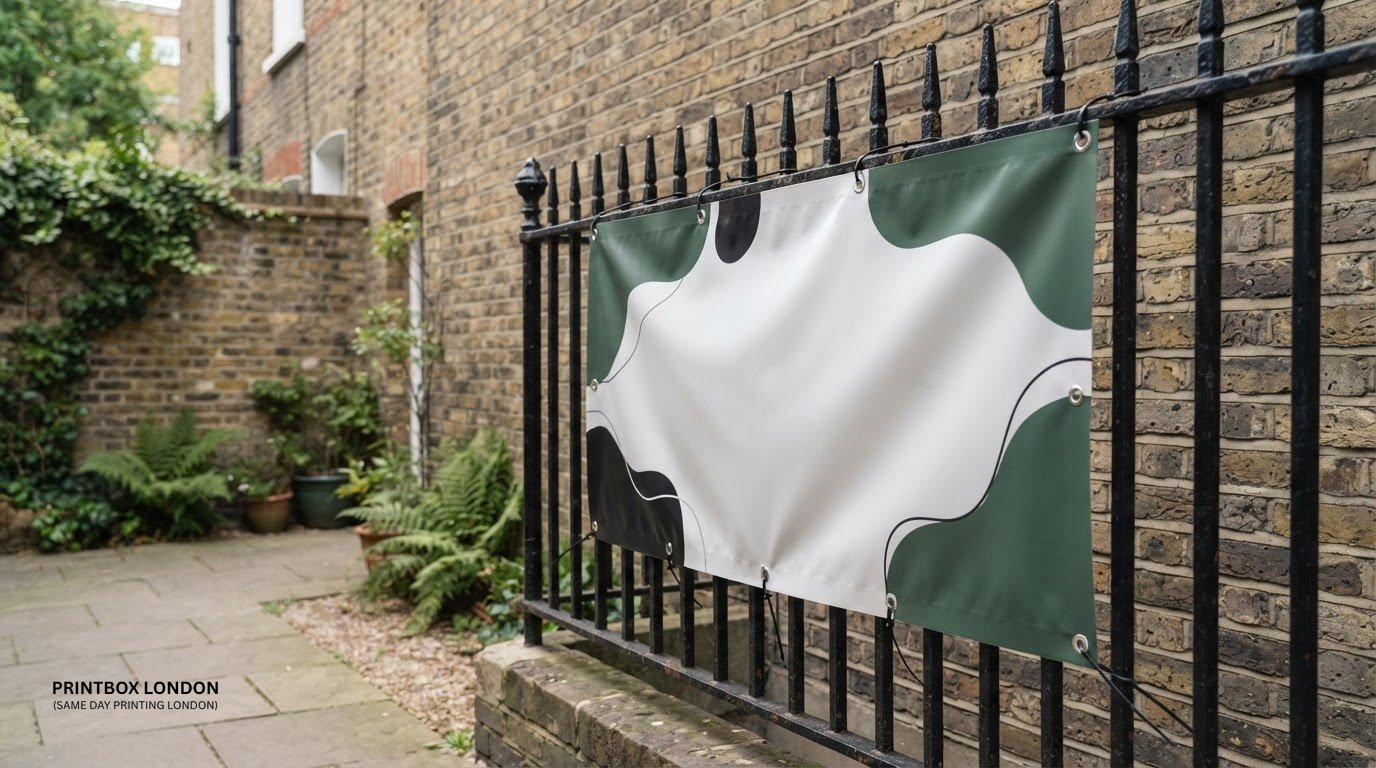
Outdoor banner performance depends on more than the image. PVC banner printing for outdoor use starts with choosing a material and finish suited to where the banner will hang. The right specification helps the finished sign fit its setting and display your message clearly.
A strong design matters, but so do practical choices such as banner size, material, single- or double-sided printing and edge finishing. A banner for a fence may need different specifications from one displayed on a building or at an event.
This guide explains how to choose a PVC banner for outdoor use, plan its size and material, decide whether to print one or both sides, and select finishing to suit the installation. You’ll also learn what to consider when preparing artwork and arranging printing, so you can make informed decisions before ordering.
Key Takeaways
- Match the banner’s dimensions and orientation to the space where it will be displayed, including when a custom size is needed.
- Choose between PVC and mesh by considering the display location and how the banner will be installed.
- Consider print sides, material weight and edge finishing together so the specification suits the intended display.
- Explore practical uses for outdoor banners, from signs to event displays, and see how professional printing can bring the job together.
Custom sizes and size tolerances
Outdoor banners can use landscape or portrait layouts, with dimensions matched to the display space. Size affects how the artwork is arranged and how clearly the message reads from a distance.
Available sizes and orientations
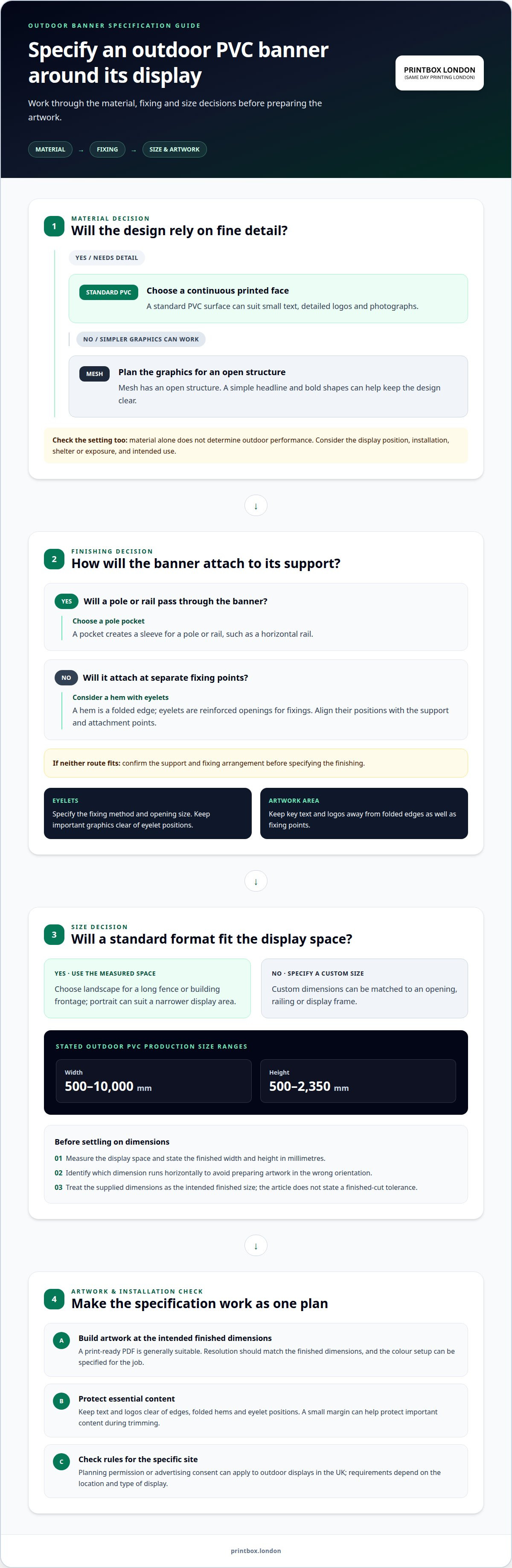
Outdoor PVC banner dimensions range from 500 mm to 10,000 mm wide and 500 mm to 2,350 mm high. The maximum length is 10,000 mm, while the maximum width is 2,350 mm. A landscape format suits a long fence or building frontage; a portrait format can fit a narrower display area. Measure the available space before settling on the finished format.
For example, a wide advertising banner needs a layout designed around its horizontal proportions. A portrait design needs the message arranged vertically, rather than stretched from a landscape file. Indoor placement can also influence the choice: a banner viewed close up may need a different text layout from one seen across an open space.
Custom banner sizing
Custom dimensions let the banner fit a particular opening, railing or display frame instead of forcing the space to suit a standard format. Specify the finished width and height in millimetres, then identify which dimension runs horizontally. That simple step helps prevent artwork being prepared in the wrong orientation.
Flexible sizing does not mean every design can be enlarged without adjustment. Text in a layout created for a small sign may become too small, while a photograph can lose detail if its resolution is insufficient. Set up the artwork using the intended finished dimensions.
Planning permission or advertising consent can apply to outdoor displays in the UK. Requirements depend on the location and type of display, so check the rules for the specific site before installation.
There is no single artwork resolution or colour setting that suits every banner size and viewing distance. A correctly prepared print-ready PDF is generally suitable. Resolution should match the finished dimensions, and the colour setup can be specified for the job.
The dimensions above are production size ranges, not a stated tolerance for the finished cut size. Keep essential text and logos clear of the edges, and treat the supplied width and height as the intended finished dimensions. A small margin can help protect important content during trimming.
PVC recycling options vary by material and local facilities, so disposal routes depend on the banner and area. To reduce replacement, consider whether the banner can be reused. A non-PVC display material may suit some projects, depending on outdoor exposure and intended use.
What are my options with additional finishing?
Choose finishing to suit the support used to display the banner. Hems, eyelets and pole pockets each work with different fixing arrangements.
For a banner fixed to a fence or frame, a hem with eyelets may suit the attachment points. A pole pocket lets a pole or rail pass through. The right choice depends on the support and how the graphics should face.
Hems and eyelet finishing
A hem is a folded edge, while an eyelet is a reinforced opening for a fixing. Together, they provide attachment points around the banner’s edge. Consider where the banner will be secured and how its edges will sit against the support. For example, eyelets along the edges can align with fixing points on a frame.
Finishing affects the usable artwork area. Keep key text and logos clear of folded edges and eyelet positions, so they remain visible after installation.
Eyelet types and sizes
Eyelets may be described by their metal finish, such as brass or silver, and by the diameter of the opening. The opening must suit the intended fixing. A small one may not fit the attachment, while a larger one may allow more movement.
Include the fixing method and required opening size in the banner’s finishing specification. Eyelet positions also affect the layout, so keep important graphics away from those points.
Hanging advice and pole pockets
Eyelets suit individual attachment points, while a pole pocket creates a sleeve for a pole or rail. Choose according to the supporting structure. A pole pocket can be useful with a horizontal rail; eyelets are more suitable when the banner attaches at separate points.
For eyelet hanging, cable ties can connect the openings to a suitable support. Position fixings evenly to limit uneven pull across the banner. The support and installation location determine the appropriate arrangement.
Before printing, decide how the banner will be displayed and include that detail with the artwork. This helps align finishing with the intended installation, rather than treating it as an afterthought. The PVC banner printing service is relevant when the project needs a printed PVC display.
Which PVC material should I choose for my banner?
Start with the job the banner needs to do. The material affects the surface for graphics, the feel of the finished sign and how its design should be prepared.
Standard PVC and mesh materials
A standard PVC surface gives artwork a continuous background, which can suit small text, detailed logos or photographs. Mesh has an open structure, so plan the graphics around the material rather than treating it like a solid sheet. For example, a simple headline and bold shapes can keep a mesh design clear.
Consider the visual result as well as the location. A photograph-led promotion may call for a continuous printed face, while a short message can work with a simpler design. Keep fine details and essential wording easy to distinguish.
PVC flex and weather resistance
PVC flex describes a flexible banner substrate. The name alone does not explain how a particular specification will perform in every outdoor setting. Consider whether the banner is for a brief event or a longer campaign, and account for shelter and exposure.
Weather resistance is not determined by material alone. The display position, installation and intended use all affect a banner’s suitability. An entrance beneath a canopy and an exposed frontage are different scenarios to describe when defining the job.
Material weight and windy locations
Material weight is one part of the specification, not a standalone measure of suitability. A banner’s dimensions, design and fixing arrangement also shape the choice. Avoid selecting material solely because a product description gives it a particular GSM.
For a windy location, start with the site and support structure. Consider whether the banner is exposed, how it will be attached and whether the design needs a solid printed face. These factors help identify which material characteristics matter most for the display.
A 440gsm description identifies a weight specification, but it doesn’t by itself establish the right choice for every outdoor banner. Compare the complete intended use, including artwork, dimensions and display conditions, rather than relying on a weight label alone.
For a practical decision, set out where the banner will be displayed, how long it needs to serve its purpose and what the artwork contains. This gives the material choice a clear basis without assuming one option suits every outdoor project.
Banner weight and single- or double-sided options
Specify how the banner will be viewed and used before settling its production details. This helps distinguish essential requirements from features that may not suit the display.
Weight and print sides
Single-sided artwork is intended to be read from one face; double-sided artwork carries a separate design on each face. Double-sided printing is useful only when viewers can approach both sides and the support leaves both visible. A banner against a wall, for example, may only need its outward-facing side designed.
For two-sided artwork, identify which message belongs on each face. This matters for directional information: visitors approaching from opposite directions may need different instructions. Include orientation requirements in the artwork brief so the intended reading direction is clear.
Mounting and installation
Mounting refers to how a banner is supported or attached at its display location. Describe the support, such as a frame or rail, when defining the specification.
Keep the printed design clear of attachment points and areas that could be obscured once fitted. This is especially important for logos, dates and contact details near the edges.
Cable ties and installation
Cable ties can be one way to attach a banner when its finished edges have suitable eyelets. The support, fixing points and installation conditions determine whether this approach fits the job. Include the intended fixing method in the specification, and have the site assessed before installation.
Keep the printed design clear of attachment points and areas that could be obscured once fitted. This is especially important for logos, dates and contact details near the edges.
Delivery and cost considerations
The quote depends on order details, including size, quantity, material and finishing. Provide the delivery destination and required timing with the specification, so they can be considered alongside production requirements. There is no single price for every banner; custom printing specialists such as Printwell Canada typically evaluate dimensions, material grades and delivery schedules to determine the final cost.
Before approving the artwork, compare the file with the final specification: print sides, orientation, finishing and display requirements. This check helps prevent a mismatch between the supplied design and the banner intended for installation.
Outdoor suitability and typical uses
Outdoor banners suit temporary signs and displays when their material, artwork and installation match the site. A retail promotion, event entrance sign and community notice each need a clear purpose. Decide what the banner must communicate before arranging the design, then make its message easy to find at a glance.
Typical uses include announcing a shop offer, marking an event entrance or displaying practical information at a community gathering. For example, an event organiser might use a banner to identify registration, while a retailer could promote a seasonal message. Keep the main wording prominent and avoid adding details that compete with it. Experienced visual display specialists such as signarama-redmond.com frequently highlight the importance of strong contrast and clean hierarchy when creating outdoor banners that need to be read at speed.
Let viewing distance shape the artwork. A banner read across an open car park needs a different text size from one beside a pedestrian entrance. Use strong colour contrast and a clear typeface; limit secondary details so the message remains legible from the expected viewing position.
Consider the actual display site, not just the design. A sheltered entrance, open fence and scaffold structure create different conditions. Mesh banners can suit scaffolding or buildings where airflow matters. Consider the banner’s dimensions, material and fixing arrangement together for the location.
Outdoor displays may be temporary or remain in place for a campaign. Intended duration, exposure and handling all affect how the banner is used. A sign for a single event has a different role from one promoting a business over a longer period. Plan storage and reuse around the specific banner and its condition.
Match the layout to the installation. A horizontal fence display generally calls for landscape artwork, while a narrow entrance may suit portrait artwork. Check that important text and logos will remain visible once the banner is positioned and attached.
The practical takeaway is to start with the site and the message. Then match the material, artwork and fixing approach to the display’s purpose. This gives a shop sign, event marker or community notice a specification based on its real use, rather than a generic outdoor format.
Printbox London (Same Day Printing London)
Printbox London (Same Day Printing London) is a practical next step when you’re planning printed displays and need to bring the specification together. The decisions in this guide help define what the finished job needs to do, where it will be shown and how its artwork should be prepared.
Before getting in touch, gather the details that shape the job: finished dimensions, portrait or landscape orientation, display location, material preference, print sides and required finishing. If the banner will hang on a building or scaffold, mention the setting. That context makes the enquiry specific rather than general.
Artwork is another useful starting point. Have the file ready, along with its intended finished size and details about the display. A correctly prepared PDF is generally suitable for print, but suitability depends on how it is set up. Clear information about the layout helps explain what the design is intended to show.
For an urgent project, include your required timing and quantity when you get in touch. Same-day printing is available for selected quantities and specifications, with turnaround depending on the order. This gives useful context for urgent printing without assuming every product or specification has the same turnaround.
It also helps to separate essential requirements from preferences. For example, note whether the banner must fit a specific space, whether people will view it from one or both sides, and what fixing arrangement the display needs. These details give the enquiry a clear purpose and help define the print specification.
Printbox London (Same Day Printing London) also provides same-day poster, flyer and business card printing. These services can support event or promotional projects where printed materials need to work alongside an outdoor display. Keep each item’s size, quantity and intended use clear when describing a multi-product job.
A concise enquiry can include the artwork, finished dimensions, quantity, material choice, print sides, finishing requirements, display location and required timing. Share the details that matter to your project; there’s no need to add specifications you haven’t decided yet. This gives the conversation a useful starting point.
For a project that includes other urgent print materials, same-day printing is available for selected quantities and specifications. Contact Printbox London (Same Day Printing London) with the job details to discuss the next step.
Contact Printbox London (Same Day Printing London) to discuss your print requirements.
Frequently Asked Questions
What can my PVC banner be printed on?
A PVC banner can display supplied artwork, including text, logos, photographs and promotional graphics. For example, a café could announce an event, while a community group might share practical information. Keep the main message prominent and check that key details remain readable from the intended viewing distance. A correctly prepared print-ready PDF is generally suitable.
How long do PVC banners last?
There is no single lifespan for every PVC banner. Exposure, use and care all affect how long it remains suitable for display. A banner used outdoors continuously faces different conditions from one brought inside between events. Storage, handling and fixing matter too. Plan around the intended display period, and review the banner’s condition before reusing it.
How many PVC banners can I order at once?
Quantity availability depends on the job. You can request one banner for a single location or multiple copies for separate display points. For a batch, prepare one final artwork file if every banner should match. If designs or dimensions differ, list each version and quantity clearly so the job details are easy to understand. Confirm availability when requesting a quote.
What PVC banner material and thickness is best for outdoor use in the UK?
The right choice depends on the display location, rather than a universal thickness. Solid PVC provides a continuous surface for graphics, whilst mesh allows airflow through its openings. Mesh can suit scaffolding or building displays, as airflow can reduce stress on fixings. Match the material to the site and intended display, rather than selecting a thickness by itself.
How long do outdoor PVC banners last in UK weather?
No fixed duration applies to every outdoor banner in the UK. Conditions vary between a sheltered entrance and an exposed site, and prolonged display brings different demands from occasional event use. Sun, rain, wind, handling and storage all affect the banner’s condition. Choose a specification suited to the location and use, and inspect the banner before putting it back on display.
What is the typical price for outdoor PVC banner printing in the UK?
The price depends on the order specification and is provided after a quote request. Relevant details include finished dimensions, quantity, material, print sides and finishing. One large banner with a particular finish is a different specification from several smaller copies. Providing the artwork and requirements helps establish a quote for the job.
What should I consider when arranging secure installation of an outdoor PVC banner in wind?
Consider the display site, supporting structure, banner material and fixing arrangement together. A qualified installer can assess whether the structure and attachment points suit the banner’s position and exposure. Use fixings suitable for the banner and installation conditions. Share the intended location and display period with the installer so the installation can be planned for those conditions.
How should I assess wind exposure when choosing an outdoor PVC banner and its finishing?
Look at whether the site is sheltered or open, and whether nearby buildings or structures affect exposure. A banner on scaffolding presents different conditions from one beside a sheltered entrance. Mesh allows airflow through its openings, which can reduce stress on fixings. Include the site and support details when deciding on material and finishing, rather than treating the banner alone as the deciding factor.
Article by
Printbox London Team
The Printbox London (Same Day Printing London) team provides practical printing guidance based on real customer requirements and day-to-day print production. We serve customers across Greater London from our Tottenham print shop, with same-day printing available for many products depending on quantity, specification, artwork and production capacity.