
Professional document lamination in London: prices and finishes
Nov 07, 2026
A laminated document should be easier to handle without making its contents harder to read. For professional document lamination in London, the price depends on factors such as document size, quantity and finish, and is provided after a quote request. There isn’t one price that applies to every job.
That matters when protecting a certificate, preparing a CV or keeping frequently handled business documents presentable. The right finish and sheet size depend on the document and how you intend to use it.
This guide explains what can affect the cost, how matt, gloss and soft-touch finishes differ, and which sizes and uses to consider. You’ll get practical points to help you decide what to laminate and what details to provide when requesting a quote.
Key Takeaways
- Understand why document size, quantity and finish all affect a lamination quote, and what details to include when requesting one.
- Compare matt, gloss and soft-touch finishes to narrow down the look and feel that suits your document.
- Choose a sheet size that fits the item, whether you’re preparing a certificate, CV or business document.
- Consider how a document will be handled and used before deciding whether lamination is suitable.
- Explore the range of document types and formats that can be considered for professional lamination in London.
Matt, gloss and soft-touch finishes
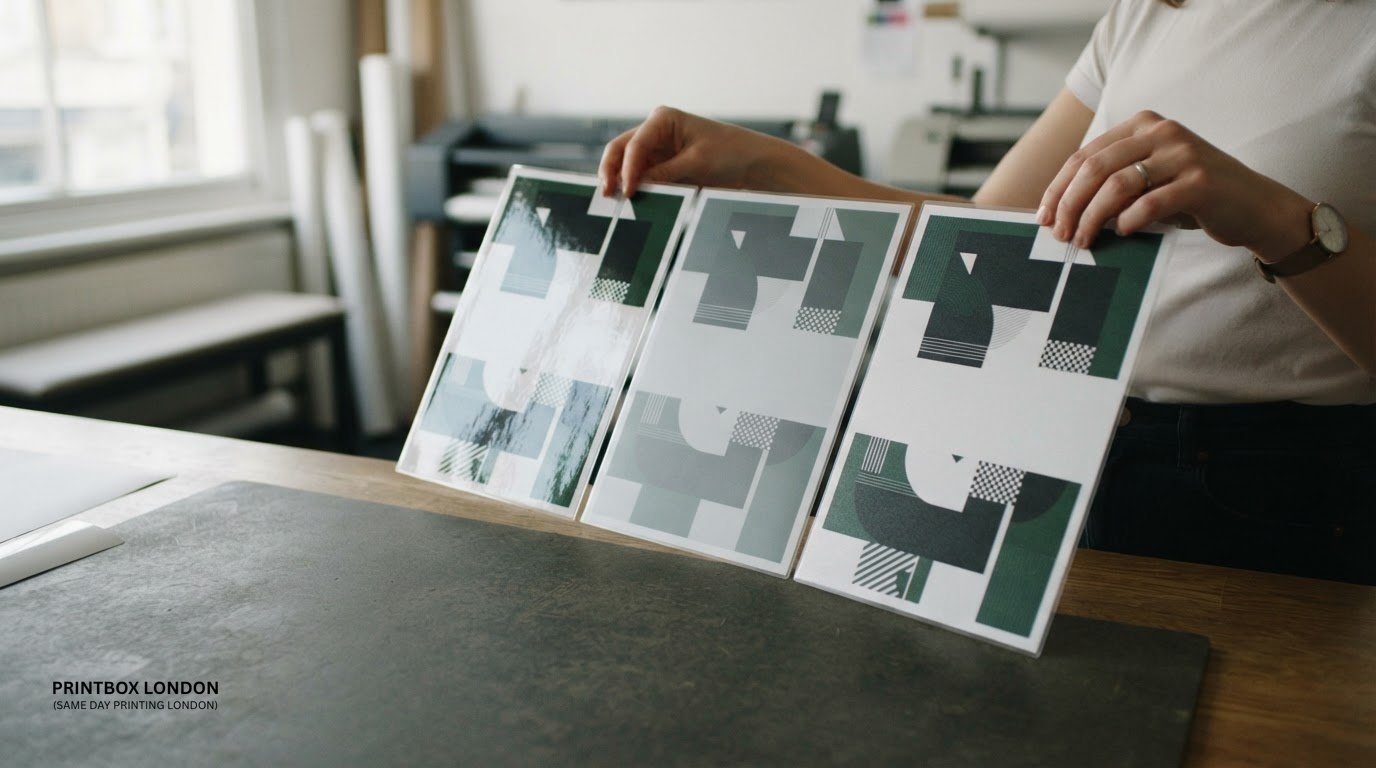
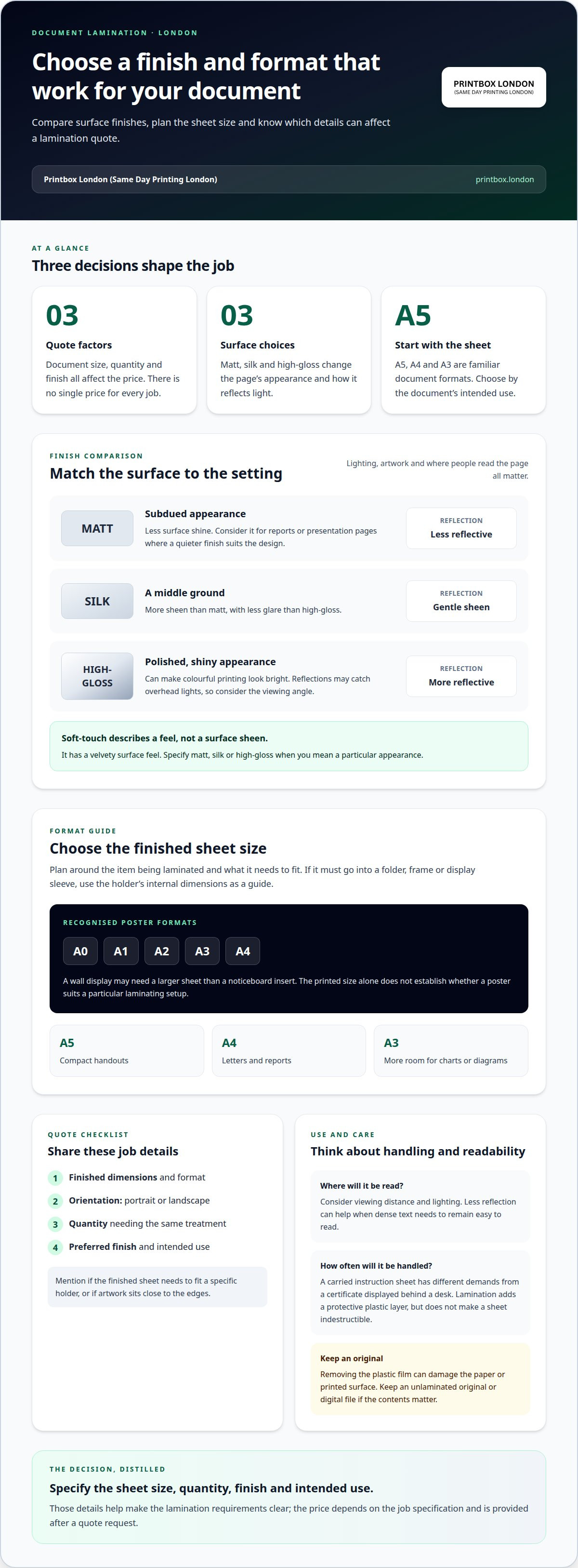
Matt, gloss and silk finishes change the surface appearance of a laminated sheet. Matt is less reflective, while gloss gives the page a pronounced shine. Silk sits between the two, with more sheen than matt but less glare than high-gloss. These terms describe the surface, not the document’s size or printed content.
Gloss lamination can make colourful printing look bright and polished. Reflections may catch overhead lights, so consider where people will read the sheet. A boldly coloured display page may suit a shiny surface, while dense text can be easier to read with less reflection. High-gloss is more reflective, so lighting and viewing angle matter.
Matt lamination gives a subdued appearance and can suit a report or presentation where a quieter surface fits the design. Silk is another option if you want some sheen without the stronger reflection of high-gloss. Consider the artwork and intended setting together, as colour balance and lighting affect how the finished page looks.
Soft-touch describes a velvety surface feel. It differs from matt, which describes appearance, so don’t assume the terms mean the same thing. When requesting a specific finish, name matt, silk or high-gloss. This makes the specification clear and avoids confusing a tactile description with surface sheen.
A DIY laminator can suit occasional sheets that fit the machine and its compatible pouches. A professional service may be more practical for a batch that needs a consistent finish or for formats too large for a home laminator. The choice depends on quantity, dimensions, equipment and finish, not on a blanket rule that one method suits every project.
Collection, delivery and post-in are handling arrangements, not lamination finishes. London services set their own arrangements, so the available method depends on the provider and order. Keep this separate from the finish decision: first specify the sheet and surface, then consider how the completed work will be handed over.
Use these points to choose a surface:
- Matt: choose a subdued look with less surface shine.
- Silk: consider a gentle sheen between matt and high-gloss.
- High-gloss: choose a more reflective, polished appearance.
Match the finish to the lighting, viewing conditions and artwork. Reflections may be more noticeable on a sheet displayed beneath bright lights than on one viewed at a desk. Saturated colours can also look different under matt and glossy surfaces. Decide which quality matters most, then state your preferred finish in the job specification.
For certificates, CVs and business papers, keep readability central to your decision. A finish changes how light interacts with the printed page, but it won’t fix small text or a crowded layout. Consider the document’s purpose, viewing distance and lighting before choosing its surface.
Laminated sheet and poster sizes
Start with the finished sheet size, not just the artwork dimensions. A5 suits compact handouts, A4 is familiar for letters and reports, and A3 offers more room for charts or diagrams. A larger sheet takes more space to store and handle, so match the format to its intended use before choosing lamination.
For a document that must fit a folder, frame or display sleeve, use that item’s internal dimensions as a guide. For example, an A4 certificate intended for an A4 frame may need room around its edges. Tell the laminating service the sheet size and whether the finished document needs to fit a specific holder.
Poster formats follow the same planning principle, but their larger dimensions affect handling and display. A0, A1, A2, A3 and A4 are recognised poster formats. A wall display might need a larger sheet than a noticeboard insert. A poster’s printed size alone doesn’t establish whether it suits a particular laminating setup.
How long does professional document lamination take in London? Some London lamination services advertise a fastest turnaround within 3 hours. Treat that as an advertised fastest option, rather than a standard time for every size or quantity.
Can laminated documents be unlaminated or repaired? Removing the plastic film can damage the paper or printed surface, so a laminated sheet generally cannot be restored cleanly. If the contents matter, keep an unlaminated original or digital file before finishing.
When specifying sheets, provide their finished dimensions and explain how they’ll be used. Useful details include:
- Format: name A5, A4, A3 or the relevant poster size.
- Orientation: say whether the sheet is portrait or landscape.
- Quantity: state how many copies need the same treatment.
- Use: explain whether it will be filed, displayed or handled frequently.
These details help distinguish a batch of A4 business pages from a single A2 display poster. They also make it easier to discuss the required format before production. If the design has content close to its edges, mention this early; trimming or placing a sheet can affect how that detail appears.
Lamination adds a protective plastic layer, but it doesn’t make a sheet indestructible. Durability depends on the material, finish and handling, so consider whether the document will be carried daily or displayed on a wall. A frequently handled instruction sheet, for example, has different demands from a certificate displayed behind a desk.
For professional document lamination in London, provide the exact sheet size, quantity and intended use when requesting a quote. If you’re also planning poster printing, specify the poster’s finished dimensions separately from the surrounding display area. This keeps the print format and finishing requirements clear from the outset.
Lamination for certificates, CVs and business documents
A certificate, CV and office reference sheet each serve a different purpose. A certificate may be displayed, a CV needs to remain easy to handle, and a business document may be used repeatedly. Decide how each item will be read, stored or updated before choosing lamination. Its purpose matters as much as its printed appearance.
For a certificate displayed in a reception area, plastic film can help protect the printed surface from fingerprints and routine handling. However, lamination covers the page, including signatures, stamps and other details. If an original has raised features or needs to remain in its existing condition, keep it unlaminated and consider finishing a copy for display.
A CV is often tailored to a particular role, so laminating the version you plan to submit can make changes impractical. Keep that copy flat and unlaminated if you expect to update contact details, experience or skills. A laminated CV may suit a careers-event display board, where visitors can read it without writing on the page.
For business documents, consider how staff will use each sheet. A laminated opening-hours notice beside a counter has different needs from an editable price list kept at a desk. A process guide used during training may work well as a protected display copy, while the working document should stay easy to replace when instructions change.
Before arranging lamination, sort documents by purpose rather than putting every sheet in one batch. A practical preparation list includes:
- Keep: identify any original certificate or signed document that must stay unaltered.
- Display: mark copies intended for a noticeboard, reception area or event stand.
- Update: leave frequently revised CVs, price lists and forms unlaminated.
- Group: provide the sheet size and quantity for each document type.
Sorting documents first reduces the risk of laminating a page that needs editing later. It also clarifies which copies need the same treatment. For example, a set of staff instructions might include one protected reference sheet and several editable working copies. Keep the versions separate before sending files or printed pages.
Plastic film changes how a document can be used. Ordinary pens won’t write easily on a sealed sheet, and removing the film may damage the page. For a form that needs handwritten entries, keep an unlaminated copy or prepare a separate laminated guide to sit beside it. The information stays visible without sealing the working form.
When enquiring about a certificate, CV or business document, include its purpose, size, quantity and whether it’s an original or a copy. These details make the job easier to specify. For valuable or irreplaceable papers, keep a separate original before arranging permanent finishing.
Lamination pricing factors
There’s no single price for every document lamination job. The price depends on the job, and a quote takes account of factors such as size, quantity, material and finish. For example, a batch of small sheets differs from a single large-format item because the dimensions and amount of film required differ.
Size is a key part of the specification. A custom sheet may require a different amount of plastic film from a familiar office format. Provide the finished dimensions and say whether the item is portrait or landscape. If it needs to fit a frame, folder or display holder, include that too. This defines the finished job more clearly than an approximate description.
Quantity matters because the quote needs to cover the total number of sheets. One presentation page is a different job from a batch of staff notices. State the number of copies and whether every sheet has the same dimensions and finish. For mixed sizes, list each format and its quantity separately.
Material and condition also affect the work involved. A printed sheet, thicker card and document with an unusual texture may behave differently during finishing. Describe what you’re supplying and whether it’s already printed or needs printing first. A colour presentation document that needs both printing and lamination, for example, has a different specification from a sheet supplied ready for finishing.
Include your preferred finish in the quote request. Matt, gloss and soft-touch describe different surface effects, so name your preference rather than asking for “lamination” alone. If you’re unsure, explain the document’s purpose, such as a presentation cover or frequently handled notice. Its intended use helps narrow down a suitable finish.
To specify the job clearly, provide these details:
- Dimensions: give the finished sheet size, or exact custom measurements.
- Quantity: separate batches by size when formats differ.
- Material: say whether you’re supplying printed paper, card or another sheet.
- Finish: identify matt, gloss or soft-touch where relevant.
- Printing: state whether the sheets are ready or need colour printing first.
Artwork readiness matters when printing is part of the job. A correctly prepared PDF gives the production team a clear source file, while a screenshot may not retain the intended layout or image quality. Provide the finished size and mention any edge-to-edge colour or important text near the trim. These details help define the full job before a quote is prepared.
For a custom job, compare quotes only when they cover the same size, quantity, material and finish. A quote for unprinted sheets cannot be compared directly with one that includes colour printing. Set out the specification clearly, then check the quoted work against your intended use. This makes the cost easier to understand than relying on a generic per-sheet estimate.
What types and sizes of documents can London lamination services laminate?
Common candidates include certificates, notices, reference sheets, menus and presentation pages. Their suitability depends on the sheet’s dimensions, material and condition. A printed A4 notice has different handling needs from a large display poster. Describe the item and its intended use so the required finishing can be assessed against the actual job.
A5, A4 and A3 are familiar document formats, but size alone doesn’t determine whether an item is suitable. A folded leaflet, unusually thick card or sheet with attached components may need a different approach. Give the finished measurements, rather than estimating from the artwork on screen. For custom dimensions, provide the width and height clearly.
Certificates and awards are often displayed, while forms and checklists may need regular updates. A laminated copy can work as a fixed reference, but it’s impractical for a sheet that needs writing or frequent changes. For example, keep an editable price list separate from a laminated customer display copy.
Business documents might include staff instructions, opening-hours notices, training references and presentation materials. Consider who will read each item and where it will be used. A notice beside a reception desk may need a different format from a reference sheet stored in a folder. State whether the document is for display, filing or frequent handling.
Poster lamination is a separate consideration from document sheets. A poster intended for a wall or display area may need a larger finished format than a page designed for a folder. Share the poster’s exact dimensions and whether its edges must align with a frame or display space. A-series labels such as A0 to A4 help describe poster formats, but the actual measurements remain useful.
For mixed jobs, organise the items by type and size before requesting a quote. A clear specification might separate A4 notices from custom-size display sheets. Include these details for each group:
- Document: identify whether it’s a certificate, notice, form, menu or poster.
- Dimensions: provide the finished size, including custom measurements.
- Quantity: state how many copies belong to each size group.
- Use: explain whether the item will be displayed, filed or handled.
- Condition: say whether it is already printed and note unusual folds or attachments.
These details help distinguish a batch of matching A4 pages from mixed materials requiring separate treatment. They also clarify whether the request concerns document lamination, poster lamination or both. Send a clear description of the formats and intended use to request a quote for your documents.
Printbox London (Same Day Printing London)
Printbox London (Same Day Printing London) provides document printing, binding and lamination in London. If your project also needs display posters, event flyers or business cards, share the format, quantity and artwork details. Same-day printing is available for selected quantities and specifications, subject to production requirements.
For a clear enquiry, describe what you need printed, the finished size and your required deadline. This gives the print team a practical starting point for your project.
Contact Printbox London (Same Day Printing London) to discuss your printing requirements.
Set up your next document for finishing
Before arranging professional document lamination in London, decide which version is the finished master and keep an unlaminated copy or source file for future changes. This can make repeat orders easier to brief, especially if a business notice or presentation needs updating.
Keep the job details together: document purpose, finished dimensions, quantity and preferred finish. A clear specification gives your enquiry a practical starting point and distinguishes a one-off item from a repeat requirement. If the document is part of a wider print project, include those details too, so the next step covers the whole job rather than one sheet in isolation.
You don’t need to have every production detail worked out before enquiring. Start with what the document needs to do and which version you want finished. Printbox London (Same Day Printing London) can help with printing, binding and lamination. Share your requirements to get started.
A clear brief is a useful start. Your documents are ready for their next use.
Frequently Asked Questions
How much does it cost to laminate my documents?
There’s no standard cost for every document lamination job. A straightforward request and a mixed-format batch involve different production requirements, so the quote reflects the actual job. If you’re budgeting, first decide which documents need finishing and which should stay editable. This defines the scope before you request a price, without relying on a generic estimate that may not suit your documents.
What are the benefits of lamination?
Lamination can help protect a printed surface from everyday handling and make a sheet more suitable for repeated display. A rota used by several team members, for example, may benefit from a protective layer, while an editable working version remains available for updates. Lamination can also give a page a finished appearance. Choose it for documents suited to a sealed surface, not sheets that need frequent writing or revision.
Where can I get professional document lamination in London?
Printbox London (Same Day Printing London) provides document lamination from its shop at 52 West Green Road, South Tottenham, London N15 5NR. Customers seeking professional document lamination in London can describe the item and its intended use when making an enquiry. For instance, explain whether a certificate is for display or a document is part of a larger presentation, so the request has useful context.
How much does document lamination cost in London?
For a London job, contact Printbox London (Same Day Printing London) for a quote. Specify whether you need lamination only or printing as well, and group items that need different finishes separately. This defines the scope and makes it easier to assess the quote against the correct service and specification.
Do London print shops offer same-day or while-you-wait lamination?
For an urgent lamination job, include your deadline and full specification in your enquiry. Turnaround depends on the format, quantity, finish, artwork readiness and current workload. State whether you need lamination alone or printing followed by lamination, as these are different production requirements. Same-day printing for other products does not establish the turnaround for a lamination job.
What lamination thicknesses and finishes are available for documents?
Printbox London offers matt, silk and high-gloss lamination finishes. The surface affects the final appearance: high-gloss, for example, reflects more light than matt, while silk has a different sheen. No film thickness is specified, so don’t choose based on an assumed micron value. Describe how the sheet will be used and your preferred finish when requesting a quote.
Can important certificates or official documents be safely laminated?
Check with the organisation that issued or will receive an important document before laminating the original. Some certificates have seals, signatures or other details that may need inspection, and film cannot be removed cleanly without risking damage. If you need a display copy, ask whether a reproduction is acceptable and keep the original unaltered for future checks or submissions.
Article by
Printbox London Team
The Printbox London (Same Day Printing London) team provides practical printing guidance based on real customer requirements and day-to-day print production. We serve customers across Greater London from our Tottenham print shop, with same-day printing available for many products depending on quantity, specification, artwork and production capacity.