
How much to print A1 plan
Nov 17, 2026
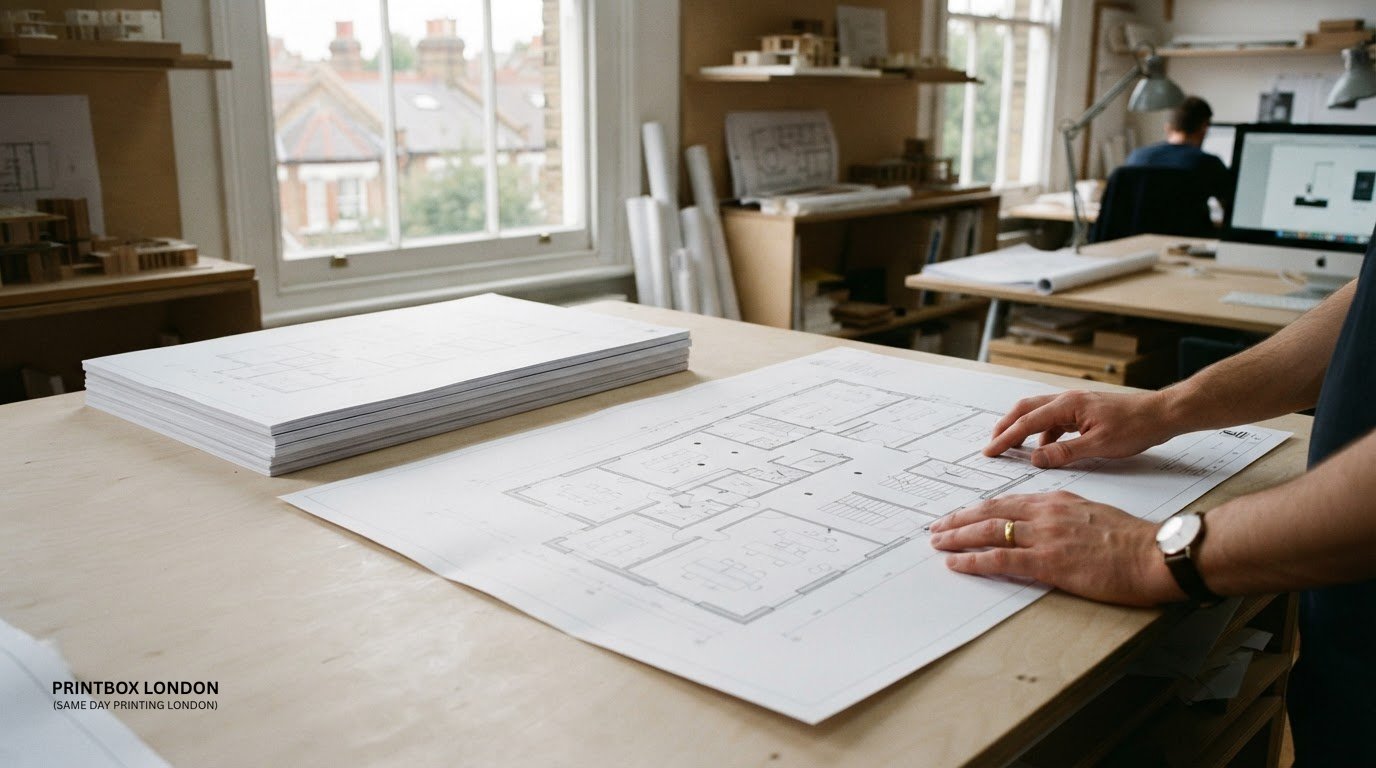
The cost of printing an A1 plan depends on whether you need monochrome or colour, the number of copies, and how the PDF is set up. If you’re weighing up how much it costs to print an A1 plan, these details matter because they affect the work involved and the final specification.
Ordering several plans can make the cost per copy an important consideration, but minimum charges and bulk rates depend on the print service and order details. It also pays to choose a sheet size that keeps key drawing information legible. Scaling an A1 PDF down can shrink text and dimensions, and may affect whether the drawing remains useful for reference or measurement.
This guide explains the main factors behind monochrome plan prices, what to understand about minimum charges and bulk orders, and how A1 compares with other sheet sizes. It also covers PDF scaling and the print settings that help preserve the drawing’s intended scale. You’ll have a clearer idea of what information to provide when arranging professional A1 plan printing in London.
Key Takeaways
- Monochrome or colour printing and order quantity both affect the quote. Find out what details to include when requesting pricing for a larger order.
- Choose a sheet size that keeps drawing information readable and suited to its purpose.
- Minimum charges can affect small or mixed-size orders, so consider the full order rather than the cost of one sheet alone.
- PDF scaling can change the drawing’s printed dimensions. Learn which settings matter when plans need to retain their intended scale.
- A print-ready file helps the printer assess size, layout and detail before production.
Are there any discounts or lower prices for large or bulk plan orders?
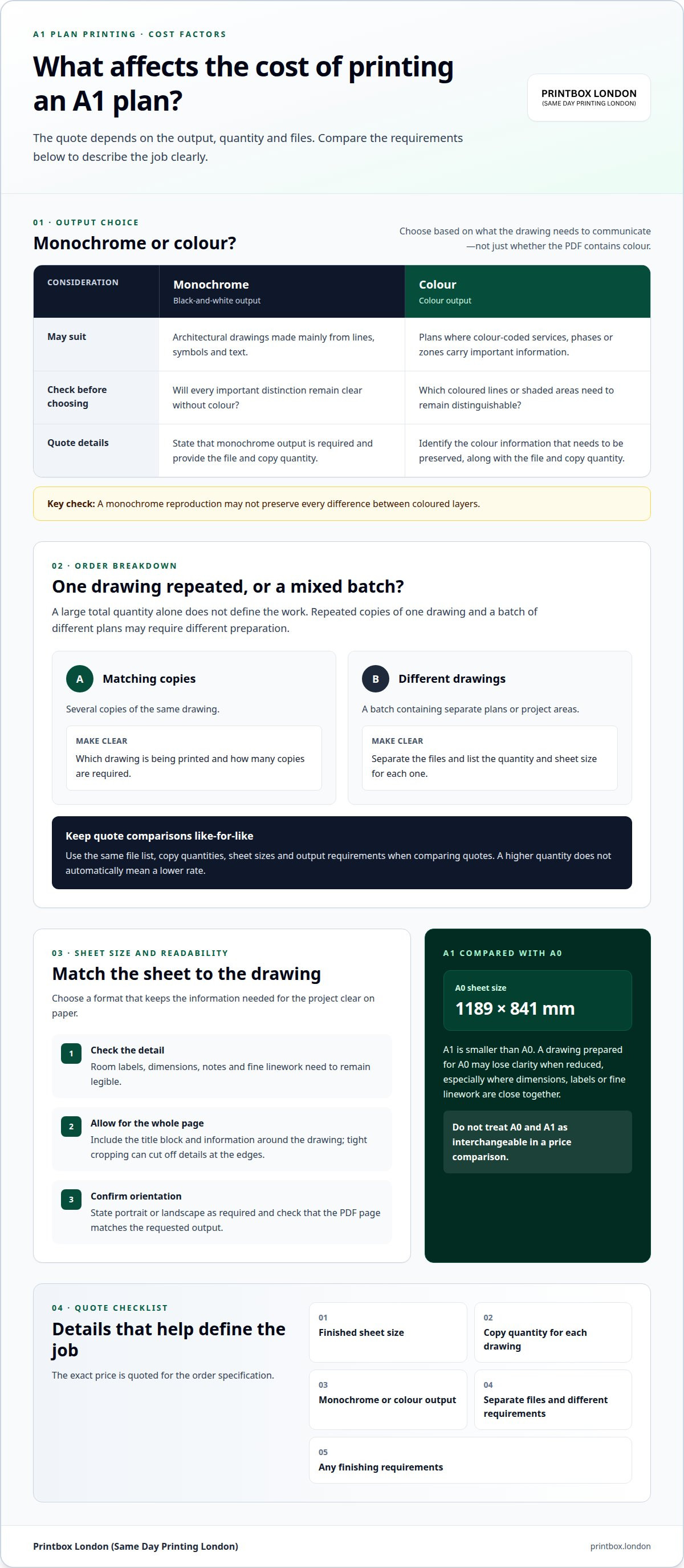
For a large order, the quote depends on the full specification. Don’t assume a higher quantity automatically means a lower rate. Include the number of copies, sheet size and file details when requesting a price. Repeated copies of one drawing and a batch of different plans may require different preparation, even if both orders contain many sheets.
For example, a construction pack might include repeated copies of one A1 drawing alongside individual sheets for other project areas. Separate the files and quantities in the order details. This lets the quote reflect what needs printing, rather than relying on a single total that leaves the breakdown unclear.
Note whether the source drawing uses colour. If coloured lines or shaded areas distinguish information, specify which distinctions need to remain visible in print. A monochrome reproduction may not preserve every difference between coloured layers. The drawing’s intended use helps determine the output specification; don’t assume every colour setting is appropriate.
When requesting a quote, say whether the order contains matching copies or separate drawings. List the required sheet size for each file and identify any differences in the requested output. If a plan contains colour-coded information, mention it clearly. These details help define the job and quote the work accurately.
Across the UK, look for a printing service that handles A1 architectural plans. In London, architectural plan printing is relevant for technical and construction drawings.
For a useful comparison between quotes, keep the job details consistent. Use the same file list, copy quantities, sizes and output requirements each time. Otherwise, differences in the totals may reflect different specifications rather than a lower price for the same work.
- List the required quantity for each drawing.
- State the sheet size for each file.
- Identify colour-coded information that must remain distinguishable.
- Describe any differences between copies or files.
A clear breakdown helps the printer assess the actual order, especially if a project includes several drawings or different requirements across the set. It also gives you a sound basis for comparing quotes and choosing a specification that suits the plans’ intended use.
Choosing a sheet size for different plans
Choose a sheet format based on what the drawing needs to communicate. A floor plan may include room labels, measurements and symbols, while a site plan can show boundaries, access points and surrounding context. A building elevation may be long and wide. The sheet needs to accommodate these elements without making them difficult to read.
Check the drawing’s layout before choosing a size. The title block, dimensions and notes around the main plan need space too. A tightly cropped format can cut off information at the edges. A larger sheet gives the drawing more room, but should still suit how people will handle and review it.
Different drawing types have different requirements. An architectural floor plan may prioritise room names and internal dimensions, while an engineering drawing may contain fine details, annotations and reference marks. A construction plan can combine several types of information. Choose a format that keeps the details needed for the project clear on paper.
Orientation matters too. A wide site layout may be landscape, while another drawing may be portrait. Check that the PDF’s page orientation matches the requested output. Rotating or fitting a page to another format can alter its layout, so state the intended orientation in the print specification.
For related drawings, consider whether reviewers need to compare sheets side by side. A consistent format can make a pack easier to navigate, particularly if it includes floor plans, elevations and detail drawings. An overview sheet may use a different format, provided its relationship to the rest of the set remains clear.
Send the print-ready PDF, specify the intended sheet format and identify any files that need different treatment. For example, a project pack may contain a general site layout alongside separate detailed drawings. Listing the required format for each file helps prevent the whole set from being treated as one uniform document.
For A1 output, the A1 plan printing information relates directly to the requested format. If you’re unsure how to describe the files, share your plan requirements.
A1 monochrome plan printing prices
The price for an A1 monochrome plan depends on the order’s specification, quantity and file. The exact figure is given in a quote for your case. Include the finished size, number of copies and any finishing requirements so the quote reflects the work needed.
Black-and-white output often suits architectural drawings made mainly from lines, symbols and text. It can keep technical information clear without reproducing colour. A plan with colour-coded services, phases or zones may need colour instead. The key question is whether the information remains distinguishable in monochrome, not simply whether the PDF contains coloured elements.
A1 and A0 are different sheet sizes, so they should not be treated as interchangeable in a price comparison. A0 measures 1189 × 841 mm, while A1 is smaller. A drawing prepared for A0 may lose clarity if reduced to A1, particularly where dimensions, labels or fine linework sit close together. The intended format should match how the plan will be read.
Order size can also affect the quote. A single A1 drawing, several copies of one file and a batch containing multiple architectural plans each require a different order breakdown. For mixed files, state the copy quantity for each drawing. That gives the printer a clear basis for calculating the work, rather than assuming every uploaded plan needs the same treatment.
File preparation matters too. A PDF set to the wrong page size may need adjustment before printing. Scaling can change the drawing’s intended dimensions, so plans used for measurement should retain their specified scale. State whether the print must be at actual size and identify any pages that differ from the rest of the order.
For a useful comparison, keep the specifications consistent across quotes. Provide the same A1 size, monochrome setting, copy count and finishing details each time. A quote for A0 plans or colour output is not directly comparable with one for A1 black-and-white printing. Comparing like for like makes differences easier to understand.
Before placing an order, use this checklist:
- Specify A1 monochrome output and the quantity for each file.
- Identify any colour-coded details that must remain visible.
- State the intended scale and whether the drawing is for measurement.
- List any finishing requirements separately from the print specification.
Clear details help match the quote to the plans’ intended use. If the drawing needs a different sheet size, review the A0 plan printing format before comparing specifications.
Minimum charge per plan size
A minimum charge is applied separately to each plan size ordered. A mixed order containing A1 and A2 plans therefore has separate size entries. The total is not worked out by treating every sheet as one identical item. List the quantity for each size so the order is clear.
This matters most when an order contains only a few plans in several formats. For example, a construction drawing set might include A1 site layouts and A2 detail sheets. Each size is a separate part of the job, even when both formats belong to one project. A single combined copy count can hide this distinction.
Colour mode also affects how an order is specified. An A1 monochrome plan and an A1 colour plan share a sheet size, but not the same print setting. If an order combines both, separate the monochrome and colour quantities. This helps the quote reflect each group accurately, rather than applying one setting to every file.
Engineering drawings can add another layer of detail. A folder may contain several A1 sheets, plus a smaller format for supporting diagrams. Give each file’s size and copy count separately. If one drawing needs colour while the others are black and white, identify that distinction alongside the file name.
Specify finishing and delivery separately from plan sizes. For example, state whether sheets should be rolled or folded and note any requested finish. These choices affect the completed job, but each sheet size still needs to be identified correctly. A clear specification keeps print, finishing and delivery details distinct.
Use this order breakdown when preparing a mixed-size request:
- Group files by sheet size, such as A1 and A2.
- Write the copy quantity beside each file or group.
- Separate colour plans from monochrome plans.
- List finishing and delivery requirements apart from print quantities.
For instance, label the project drawings as “A1, monochrome” and supporting diagrams as “A2, colour”, then give each group’s quantity. This avoids confusion if a construction pack contains several formats or an engineering set includes both colour-coded and line-only drawings.
Before approving a quote, check that its breakdown matches the files, sizes, print modes and quantities you supplied. If the order uses multiple formats, confirm that each size has its own line. This makes it easier to spot a missing file or incorrect quantity before production begins.
PDF requirements and scaling checks for professional A1 plan printing
A professional scaling and printing guide helps review a PDF’s page size, orientation and scaling before producing an A1 plan. These checks help identify a mismatch between the file and the requested output. For technical drawings, the key question is whether the printed sheet will preserve the intended dimensions and remain suitable for its purpose.
For drawings that will be measured from the sheet, use 100% or actual size as the print setting. At a drawing scale of 1:100, one centimetre on paper represents one metre on site. Automatic options such as "fit to page" can change the scale. A professional print check evaluates how the file is set up and whether the requested output matches the drawing's intended scale.
Reducing an A1 PDF to A3 gives the page a quarter of its original area. Text, dimensions and linework become smaller as a result. A thorough assessment determines whether the detail remains readable at the selected size. If it does not, reducing the file may not suit the drawing's purpose; the layout or required output size may need reconsideration.
Image resolution is another consideration. A resolution of 300 dpi is recommended for printing A1 plans. DPI describes image detail at the printed size. Proper file checks can assess whether embedded images are likely to reproduce clearly at A1. Enlarging a low-resolution image can make it look soft or pixelated, even when the PDF page dimensions are correct.
Page edges need a careful review too. A common bleed allowance is 3 mm, although the suitable setup can vary by product. Bleed extends artwork beyond the final trim edge. Important text, dimensions and drawing borders should also have enough space from the edge to avoid an unintended trim. Careful file preparation reviews the artwork and relevant print requirements rather than assuming one setup suits every file.
For example, trimming may cut a border placed close to the edge. A dimension label near the page boundary could become harder to read or lose part of its content. Check orientation too: a landscape drawing saved as portrait may need rotating, and automatic fitting could alter its scale.
Before printing, a proper file check compares the PDF's page setup with the requested A1 output and reviews the scaling instruction. If these details do not align, the file can be examined before production. This is useful for architectural or construction drawings where dimensions, borders and annotations must remain clear and correctly positioned.
Printbox London (Same Day Printing London)
Printbox London (Same Day Printing London) prints architectural plans, CAD plans, construction plans and engineering drawings. To request a quote, share the quantity, colour requirements, sheet size and PDF details so the job can be assessed against the right specifications.
Same-day printing is available for selected quantities and specifications. Printbox London (Same Day Printing London) also offers Same Day Poster Printing, Same Day Flyer Printing and Same Day Business Card Printing.
If you’re ready to discuss your print requirements, contact Printbox London (Same Day Printing London).
Move your A1 plan towards print
Before placing an order, decide what the printed plan needs to help people do. A drawing for quick reference may have different priorities from one used for coordination or measurement. Its purpose gives the print brief a clear starting point and helps align the output with the project.
If you’re working out how much it costs to print an A1 plan, focus your enquiry on the finished result you need, not just the sheet size. Include the file and the details that define the job, then use the quote to assess whether the proposed specification suits your plans. A clear brief makes the next decision easier.
For urgent printing, turnaround depends on the order’s quantity and specification. Share your requirements early, especially when the plans are part of a wider project schedule.
A clear brief helps you choose a print specification that supports the work the drawing needs to do.
Frequently Asked Questions
Can you print large-scale architectural plans or drawings for me?
Yes. Printbox London (Same Day Printing London) prints architectural plans, CAD plans, construction plans and engineering drawings. A project pack might include floor layouts, site drawings or technical elevations. Send the files with the required sheet sizes and quantities, and identify any drawings that need colour. This helps match each file to its intended print specification.
What size should building plans be printed?
Choose a sheet size that keeps the drawing’s labels, dimensions and linework readable at its intended scale. A1 measures 594 × 841 mm, while A0 measures 841 × 1189 mm. For a detailed building layout with extensive notes, the larger sheet may provide more working space. A smaller drawing can suit a concise plan, provided key details remain legible.
How much does it cost to print an A1 plan in the UK?
The exact cost to print an A1 plan is provided in a quote for your specification. It depends on factors such as quantity, monochrome or colour output, file requirements and finishing. For example, a single black-and-white drawing and a batch of colour-coded plans are different jobs. Include the number of copies and any required finishing to receive a quote for the work you need.
What is the average UK price for black-and-white A1 plan printing?
There isn’t one reliable average that applies to every black-and-white A1 plan order. The quote depends on the order’s quantity, file setup and finishing requirements. A straightforward single-file order differs from a set of drawings with separate copy counts. For a useful estimate, specify that the plans are monochrome and provide the quantity for each file, rather than relying on a general market average.
How much does colour A1 plan printing cost in the UK?
The cost is quoted for the specific colour A1 plan order. Quantity, colour coverage, file setup and finishing can affect the quote. A drawing with a few coloured markers differs from one using broad shaded areas or several colour-coded layers. When describing the job, identify which files need colour and which can be printed in monochrome. That gives the quote a clear, practical basis.
How much do online UK printers charge to print and deliver an A1 plan?
Online printing and delivery costs vary with the printer, plan specification and delivery option, so a general figure may not match your order. For a quote from Printbox London (Same Day Printing London), provide the A1 file, copy quantity, colour choice and finishing requirements. Include your delivery preference too, so the price can reflect the complete job rather than printing alone.
How long does A1 plan printing take at UK print shops?
Turnaround depends on the order’s quantity, specifications, artwork readiness and production requirements. Same-day printing is available for selected quantities and specifications, but a large or complex plan set may need a different schedule. Several files in mixed sizes or with different finishing requirements involve more than printing one ready-to-use PDF. Include your deadline with the order details so the job can be assessed appropriately.
Can a print shop print an A1 plan for me, and what affects the cost?
Yes. A print shop can produce an A1 plan from a suitable print file. The cost depends on the quantity, colour mode, file preparation and finishing. For instance, a correctly sized PDF needing monochrome copies has different requirements from multiple colour drawings requiring separate quantities. Provide the files and a clear specification, including the intended size and any finishing, to get a quote based on the actual job.
Article by
Printbox London Team
The Printbox London (Same Day Printing London) team provides practical printing guidance based on real customer requirements and day-to-day print production. We serve customers across Greater London from our Tottenham print shop, with same-day printing available for many products depending on quantity, specification, artwork and production capacity.