
Brochure printing in London: costs, prices and quotes
Oct 25, 2026
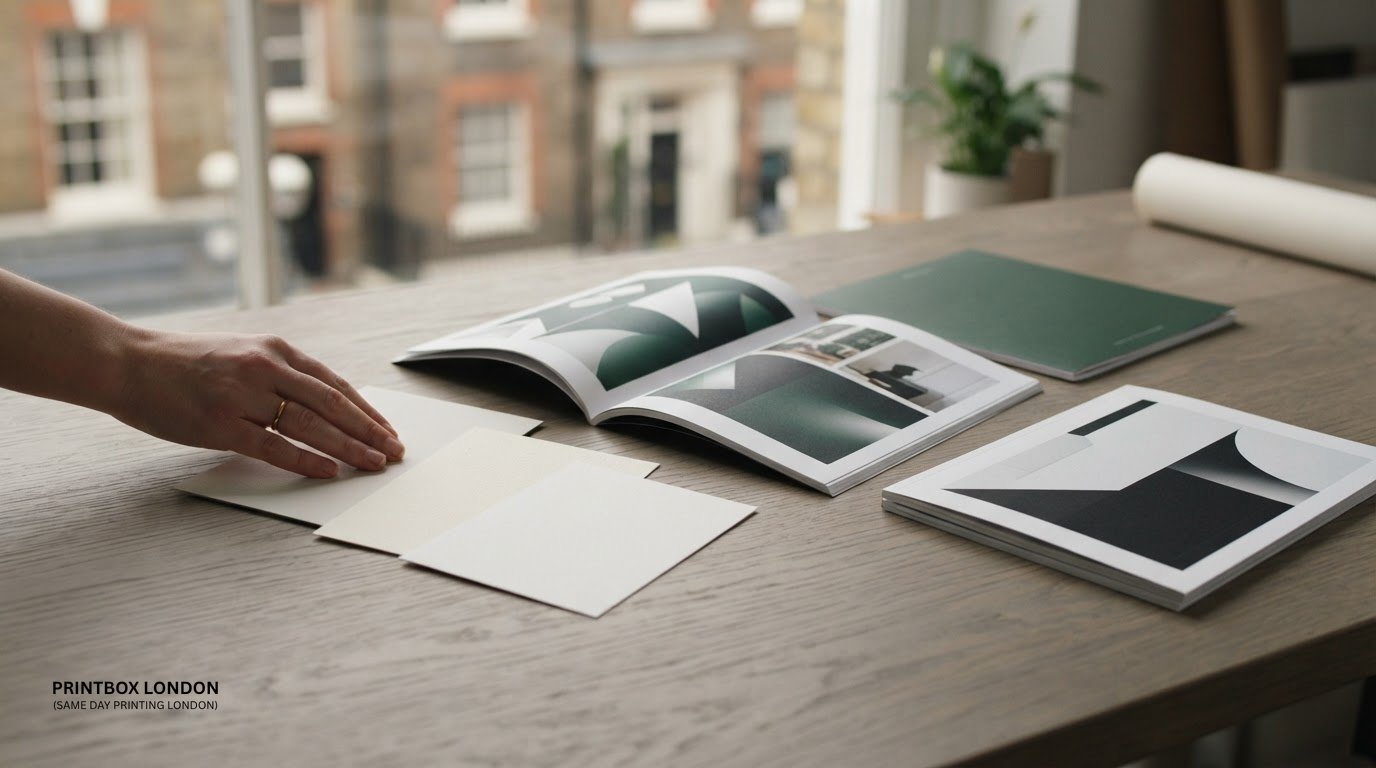
A brochure printing quote in London depends on the job, so there isn’t one price for every brief. The total is shaped by the quantity, format, paper and finishing you choose. Set out the requirements clearly, then compare quotes against the same specification rather than relying on a headline figure alone.
It’s understandable to want a clear cost before committing to brochure printing in London. A useful quote should reflect the brochure you need, including its purpose and the details that affect production. A short handout and a multi-page brochure are different jobs, so a quote for one may not help you budget for the other.
This guide explains how your choices influence costs and what to prepare when requesting a quote. It covers paper stocks and finishes, formats and print-run planning, plus the difference between digital and litho printing. You’ll also find practical tips for preparing artwork and explaining an urgent deadline. Use them to create a clear brief, compare like-for-like specifications and avoid adding options you don’t need.
Key Takeaways
- Your quote depends on the full specification, including quantity, format, paper and finishing. Set these before comparing prices.
- Choose a brochure size and shape that suit the content and how people will use it, rather than selecting a format by habit.
- For artwork with colour running to the edge, allow 3 mm bleed so the design can be trimmed cleanly.
- Match the print run to your distribution needs. The quantity you order affects the quote and helps avoid printing more copies than you can use.
- Prepare a clear brief with the finished size, page count, quantity and artwork details to make your quote request more useful.
Paper stocks and finishes
Paper affects a brochure’s feel, flexibility and colour appearance. Start by matching the stock to its purpose, then choose a finish that supports the design.
Paper weight and finishing advice
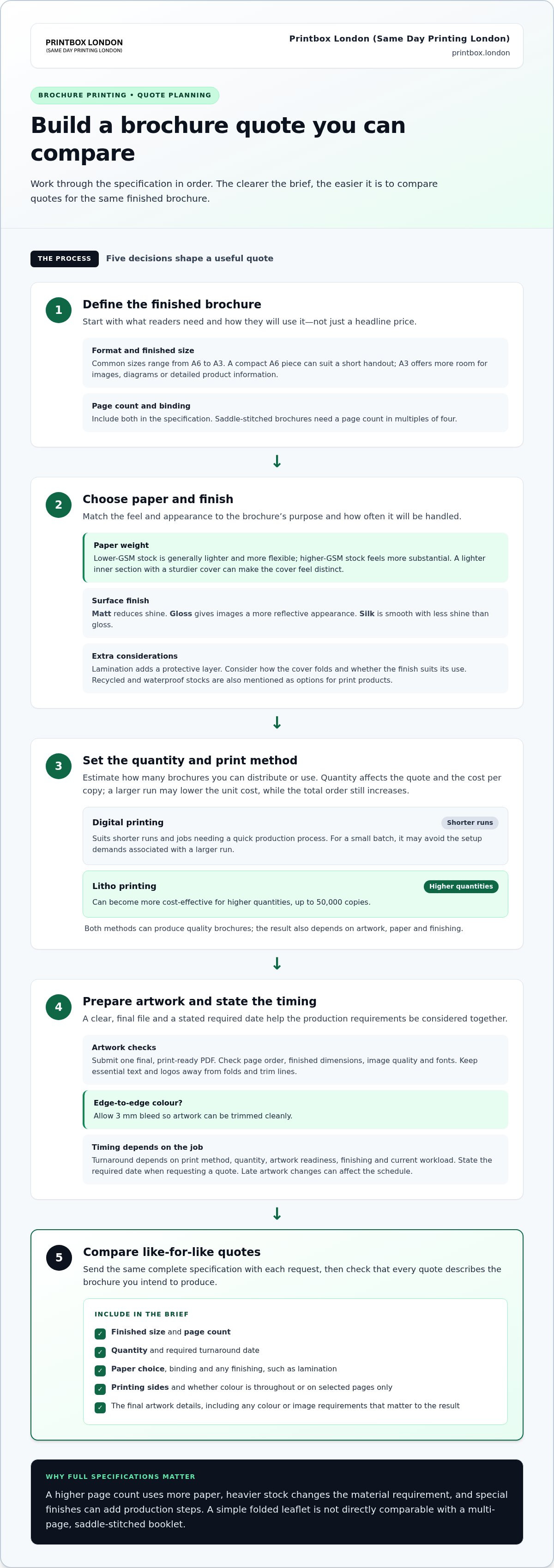
Paper weight is usually measured in GSM, or grams per square metre. Lower-GSM stock is generally lighter and more flexible, which can make pages easier to fold and turn. Higher-GSM stock feels more substantial. If you want the cover to feel distinct from the pages inside, consider a lighter inner section with a sturdier cover.
Think about how readers will handle the brochure. A handout for a single event may have different requirements from one kept on a reception desk. Page count and binding also affect how the finished piece opens. Saddle-stitched brochures need a page count in multiples of four. Include the binding and page count in your print specification.
Finishes and special features
Common options include matt, gloss and silk finishes. Matt reduces surface shine, while gloss gives images a more reflective appearance. Silk has a smooth surface with less shine than gloss. Recycled and waterproof stocks are also available for print products. Choose a finish to suit the design and intended use, rather than appearance alone.
Lamination adds a protective layer to the paper. It may suit a brochure that will be handled repeatedly, but consider how the cover will fold and whether the finish suits its intended use. Name your preferred finish in the brief. If you’re comparing options, ask for each finish to be stated clearly in the quote.
Colour can look different on matt, gloss or uncoated paper. Check important brand colours and image detail against your chosen stock. For example, a photography-led brochure needs images that stay clear at the finished size, while a text-led guide needs comfortable contrast and legible small type.
Prepare artwork with the paper and trim in mind. Bleed is artwork extending beyond the cut edge; include 3 mm where colour runs to the edge. Keep essential text and logos away from folds and trim lines. Before approving the file, check the finished dimensions, page order and image quality, then review a proof if one is available.
For a more sustainable choice, look for specific information about recycled content or paper sourcing. Don’t rely on a broad “eco” description without details. You can also reduce waste by planning the quantity carefully and focusing the brochure on information readers need. These checks help you make a considered paper choice without losing sight of the brochure’s purpose.
How much does brochure printing cost?
There is no single price for brochure printing in London. The quote depends on the job’s specification and quantity, including format, page count, paper, colour coverage, finishing and print run. For a useful comparison, provide the same details for each quote request.
Digital printing suits shorter runs and jobs that need a quick production process. Litho printing can become more cost-effective for higher quantities, up to 50,000 copies. Both methods can produce quality brochures; the result also depends on artwork, paper and finishing. For a small batch, digital may avoid the setup demands associated with a larger run.
What affects the quote?
Set out the job clearly before requesting a quote. Include the finished size, page count, quantity, paper choice and whether printing is single- or double-sided. State whether the brochure is full colour throughout or uses colour on selected pages only. Include the binding and any finishing, such as lamination.
These choices affect one another. A higher page count uses more paper, while heavier stock changes the material requirement. Special finishes can add production steps. A quote for a simple folded leaflet is not directly comparable with one for a multi-page, saddle-stitched booklet. Check that each quote matches the finished piece you intend to produce.
Turnaround and print run
Turnaround means the time needed to produce the job. It depends on the print method, quantity, artwork readiness, finishing and current workload. An urgent request with print-ready artwork and a straightforward specification is different from a large run requiring several finishing steps. Give the required date when requesting a quote, so timing can be considered alongside the specification.
Quantity affects production planning and the cost per copy. A larger run may lower the unit cost, but the total order still increases with the number printed. Estimate how many brochures you can distribute or use before choosing a quantity. If your plans are uncertain, compare suitable run sizes rather than ordering excess stock.
For a fast turnaround, prepare one final, print-ready PDF and check the page order, finished dimensions, image quality and fonts before submitting it. Late artwork changes can interrupt production and affect the schedule. For colour-critical work, review a proof before approving the full run. Include the complete specification, quantity and required turnaround when requesting a quote.
Brochure formats, sizes and shapes
Choose a format around the information people need to read and how they’ll use the brochure. Common brochure sizes range from A6 to A3. A compact A6 piece can suit a short handout, whilst A3 gives more room for images, diagrams or detailed product information. The right size also depends on where the brochure will be displayed or distributed.
Start with the finished size, not the flat artwork. A folded sheet becomes a smaller brochure, so each panel needs a clear role. For example, a folded A4 sheet can organise an introduction, key details and contact information across its panels. Check that headings, images and essential details stay within each panel, rather than crossing a fold or sitting too close to the edge.
The format shapes the reading experience. Portrait can suit a conventional presentation, while landscape provides more width for photographs, timelines or comparisons. Square formats create a different visual balance, but still need enough room for the content. Before choosing a format, sketch the panels and place the main message, images and contact details. This can reveal a crowded layout before you start designing.
Page count and binding should work together. A multi-page brochure can organise information into sections, while a folded leaflet keeps it compact. Saddle stitching uses staples through the centre fold, making it suitable for brochures that open as pages. Set the finished dimensions and panel order before designing, as the fold affects artwork placement. Check the final PDF at actual size, especially where text is close to folds or trim edges.
Choose a quantity that reflects how the brochures will reach their audience. A small meeting may need a different print run from a public event or distribution campaign. Decide where copies will be handed out, displayed or posted, then estimate the stock needed for each use. If you have multiple versions, such as brochures for different product ranges, count each one separately.
For a London order, include the finished size, orientation, fold, page count, quantity and required delivery day in the brief. Describe whether the piece is a folded leaflet or a bound brochure, and attach artwork showing the intended panel sequence. These details help a brochure printing service assess the job accurately. They also reduce confusion between flat sheet size and finished format, particularly when a layout includes several folds or a custom shape.
Printing for small and large print runs
Print run options can vary, so check the available quantities before ordering. Any quantity is accepted. Choose a run size based on how the brochures will be used, not on a minimum threshold. A small batch may suit a specific meeting or service launch, while a larger order can support regular distribution. Set the quantity around your plans and storage capacity.
For a small run, consider where each copy will go. A set for a client presentation, for example, may be intended for a defined team rather than wide distribution. Allow for the copies needed at the event and for any follow-up use. Tying the quantity to a clear purpose helps avoid storing brochures that become outdated when details change.
For a larger run, plan distribution before approving the order. Identify the teams, venues or campaigns that need copies, then allocate quantities for each. If you’ll store and distribute brochures over time, consider whether their information is likely to change before the stock is used. A print run is most useful when the content stays relevant throughout its planned use.
Decide quantities separately for different versions. A company might prepare one brochure for its core service and another for a particular audience or event. Work out the amount required for each version instead of combining them into one total. This helps keep the right brochure with each team and reduces the risk of distributing information intended for another audience.
Page count can also shape the format of the job. Saddle-stitched booklets are suitable for short-run printing of up to 64 pages. If your brochure has several sections, confirm the final page sequence before arranging production. This is especially useful when covers, inserts or revised pages are involved, because a clear final file helps keep every copy consistent.
Before ordering, prepare a simple allocation plan: note each version, its audience, required quantity and who will manage the stock. Check that the artwork matches the version name and that no outdated file is included. For repeat campaigns, keep the approved artwork and specification together, then update only what has changed. This gives future orders a clear starting point without assuming the next run must match the last.
Brochure pricing and quotes
A useful brochure quote starts with a complete brief, not just a copy count. Include the finished size, page count, quantity, paper, colour coverage and binding. Add the artwork file and required date. These details help price the job you actually need, rather than an assumed specification.
Ask for the quote to describe the finished product clearly. It should identify the format, stock, print sides, binding and finishing. If you’re comparing options, request the same specifications for each. A quote for a folded leaflet, for example, is not a like-for-like comparison with one for a saddle-stitched booklet.
Read the total alongside the unit cost. A larger order may change the cost per copy, but total spend and usable stock still matter. For a campaign with several brochure versions, ask for each quantity and specification to be listed separately. This makes it easier to see how a change in page count or paper affects each item.
Before approving a quote, compare it with your final document. Check the page order, dimensions, spelling, images and finish. If a proof is part of the approval process, review it before authorising production. A late text change or replacement file can alter the job, so make sure the approved version is the one intended for printing.
Clarify what happens after production. Ask whether the quoted amount includes collection or courier arrangements, and whether any delivery charge is separate. These are practical details, not assumptions: a London event with a fixed venue date needs a different handover plan from brochures being collected for ongoing office use. Confirm the destination and required date in your brief.
Use a short checklist before sending your request:
- Finished size, orientation and page count.
- Quantity for each artwork version.
- Paper stock, colour coverage, binding and finish.
- Print-ready file and required completion date.
- Collection or courier preference and destination details.
When a quote arrives, check that every requested detail appears and compare the same specification across options. If you need a change, state exactly what should differ, such as the paper stock or quantity. That keeps the revised quote clear and helps prevent an outdated document or earlier version from being used.
Printbox London (Same Day Printing London): Same Day Printing
Printbox London (Same Day Printing London) can help with a brochure quote or another urgent print job. Share the brochure’s finished size, page count, paper, quantity and artwork to give a clear picture of the specification.
Same-day printing is available for selected quantities and specifications. Services include Same Day Poster Printing, Same Day Flyer Printing and Same Day Business Card Printing. Have your artwork ready and include the quantity and deadline when you get in touch, so the job requirements are clear from the start.
Contact Printbox London (Same Day Printing London) to discuss your print requirements.
Make your brochure brief work harder
Before requesting a brochure printing quote in London, decide what readers should do after seeing your brochure. A clear purpose guides the message, layout and level of detail. A product introduction, for example, may prompt an enquiry, while an event handout might direct readers to book or visit.
Give your team one agreed brief and one final artwork file. This helps keep the approved message consistent across the print run. If several people are reviewing the design, gather their edits before submitting the final version. A settled file makes the next step straightforward.
Once the purpose is agreed, you’re ready to turn your design into a print-ready job.
Take the next step with a clear brief and a brochure ready to represent your business.
Frequently Asked Questions
Can I use my own brochure design?
Yes, you can supply your own design. A print-ready PDF is preferred; JPG, PNG and TIFF files are also accepted. If your brochure was designed in Canva, for example, export the finished artwork as a PDF rather than sending screenshots. Check that the file has the correct page order and finished size before submitting it. Label multiple versions clearly.
Can I walk in without an appointment?
Walk-in orders are accepted at Printbox London (Same Day Printing London). Bring your brochure artwork and a clear note of the quantity, finished format and any finishing required. If you need a folded handout for a meeting, for example, specify the fold and required date. You can also order online if your artwork is ready.
Do you deliver across London?
Same-day local courier delivery across London may be available, depending on the postcode, job size, completion time and courier availability. You can also collect from the Tottenham shop once your order is confirmed ready. For a brochure going to an event venue, include the full delivery postcode and required date in your order details to help plan the handover.
What file format do I need?
PDF is the preferred format for brochure artwork. JPG, JPEG, PNG, TIFF and ZIP files are also accepted. For a multi-page brochure, check that the pages are in the intended reading order and that the supplied file represents the finished design. Raster images should target 300 dpi at final size. If your document contains multiple linked assets, package them clearly rather than sending separate, ambiguously named files.
What’s the fastest you can print?
Same-day printing is available for selected quantities and specifications, but brochure turnaround depends on details such as page count, stock and finishing. A straightforward folded design differs from a multi-page, saddle-stitched job. Send the finished artwork, required quantity and deadline together so the production team can assess the job and its turnaround.
What types of brochures can London printers produce?
Common options include folded brochures and multi-page, saddle-stitched booklets. A folded piece can suit a short service overview, while a stitched booklet can organise longer information into sections. Format, paper and colour coverage can also vary. Decide how readers will use the piece, then match its layout and binding to the content.
How much does brochure printing cost in London?
There isn’t one fixed cost for every brochure. The quote depends on the finished format, page count, quantity, paper, colour coverage and finishing. For a meaningful comparison, use the same specification for each quote request. State whether you need a folded leaflet or bound booklet, and include the artwork version and required date.
Which London printers offer same-day or next-day brochure printing?
Printbox London (Same Day Printing London) offers same-day printing for selected quantities and specifications. Brochure turnaround depends on page count, paper, finishing, artwork readiness and production workload. If you’re working towards an event, include its date and venue deadline in your request. This helps the production team assess the schedule for your specific brochure job.
Article by
Printbox London Team
The Printbox London (Same Day Printing London) team provides practical printing guidance based on real customer requirements and day-to-day print production. We serve customers across Greater London from our Tottenham print shop, with same-day printing available for many products depending on quantity, specification, artwork and production capacity.